
ONLINE-FORUM
Krisenresilienz im Tourismus
live am 22. April 2021 I 10.00 bis 11.30 Uhr
ONLINE-FORUM
live am 22. April 2021 I 10.00 bis 11.30 Uhr


Institut für Regionalentwicklung
Eurac Research
Bozen, Italien
Lehrstuhl Tourismus und Zentrum für Entrepreneurship
Katholische Universität Eichstätt-Ingolstadt

Geschäftsführender Partner
TREUGAST Solutions Group
Die aktuelle Krise legt die Verwundbarkeit der Tourismusbranche offen und zeigt auf, dass sich der Tourismus teilweise als nicht widerstandsfähig erweist. Welche Voraussetzungen und welche Denkansätze braucht die Tourismusbranche, um krisenresilienter zu werden? Was sind die konkreten Lehren aus der Coronakrise für Unternehmen und Destinationen?
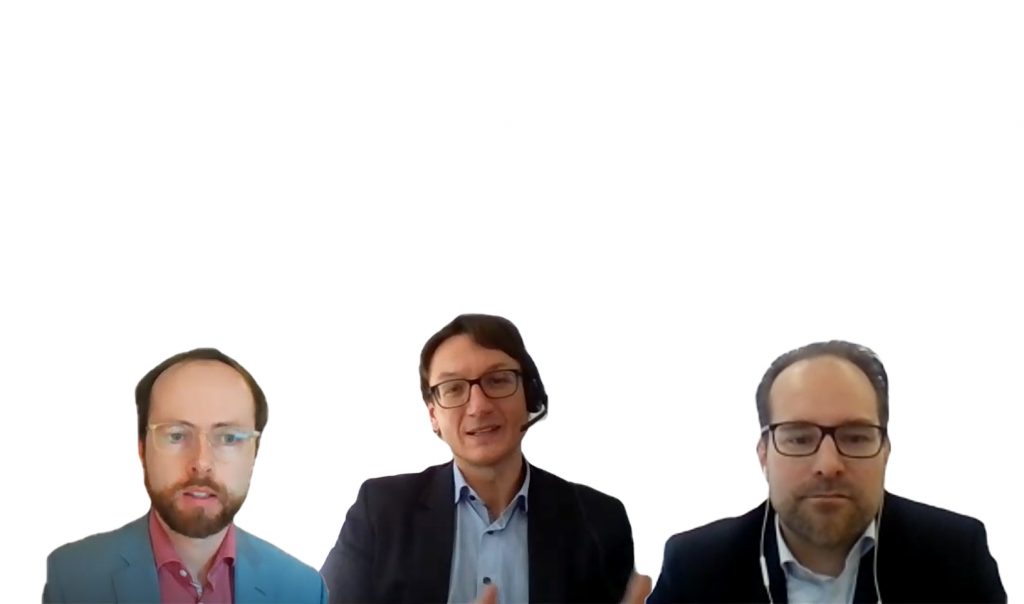
„Wiederherstellung, Anpassung oder eine fortlaufende Entfaltung neuer Entwicklungswege sind die drei entscheidenden Ansätze, um die Widerstandsfähigkeit, sprich Resilienz, im Tourismus zu erhöhen.“ Mit dieser Empfehlung eröffnet Philipp Corradini seine Keynote im Rahmen der Diskussionsrunde.
Sie sehen gerade einen Platzhalterinhalt von YouTube. Um auf den eigentlichen Inhalt zuzugreifen, klicken Sie auf die Schaltfläche unten. Bitte beachten Sie, dass dabei Daten an Drittanbieter weitergegeben werden.
Mehr InformationenUm gemeinsam der Krise zu trotzen, ist die Kollektivität innerhalb der Tourismusbranche der Schlüssel zum Erfolg. „Krisenresilienz im Tourismus kann nur erreicht werden, wenn sie unter Einbindung aller Akteure angestrebt wird“, so Corradini weiter. Von großer Bedeutung hierbei ist es, die Tourismusdestinationen in verschiedene Subsysteme zu unterteilen. Somit könnten den unterschiedlichen Verantwortungs- und Interventionsebenen aufgezeigt werden, welche Entwicklungsmöglichkeiten und Stärkung der Resilienz für jeden Einzelnen möglich sind.
Auch Daniel Zacher spricht sich für mehr Kollektivität zum Aufbau von Widerstandsfähigkeit im Tourismus aus. „Für mehr Resilienz auf Ebene der Destinations-Management-Organisationen (DMO) ist ein überregionaler Austausch und ein gemeinsames Zukunftsverständnis aller Akteure wichtig. Dabei muss aber auch die Bevölkerung als Impulsgeber miteinbezogen werden.“
Corradini hebt die Bedeutung von einheimischen Touristen bei der Ausrichtung auf Zielgruppen und der Konzeption von Maßnahmen hervor. Dabei setzt er den Fokus auf qualitatives Wachstum als Zukunftsmotor der Branche. „Wertigkeit und Nachhaltigkeit touristischer Produkte sollten zukünftig wichtiger als quantitatives Wachstum sein.“ Corradini betont, „auf (ein)heimische Touristen zu setzen, ist bestimmt ein Weg, robuster gegenüber Krisen und sonstigen Disruptionen zu sein.“
„Resiliente Destinationen zeichnen sich durch geteilte Zukunftsvorstellungen und gemeinsames Handeln aus, vielfältige Strukturen und Diversität, eine Kultur der Lern- und Veränderungsbereitschaft, die auf effektive Governance-Strukturen trifft, das heißt auf weniger Bürokratie“, unterstreicht Daniel Zacher.
Um langfristig touristische Unternehmen und Unternehmungen nachhaltig zu stärken, braucht es neue Erfolgsvariablen, angepasst an die jeweiligen Situationen. Moritz Dietl spiegelt die Sicht der Unternehmer*innen: „Mit Blick auf die Zukunft lässt sich die Widerstandsfähigkeit gegen derartige Krisen aus unserer Sicht einzig durch solides Wirtschaften und Weitsichtigkeit im unternehmerischen Handeln verbessern.“
Sie sehen gerade einen Platzhalterinhalt von YouTube. Um auf den eigentlichen Inhalt zuzugreifen, klicken Sie auf die Schaltfläche unten. Bitte beachten Sie, dass dabei Daten an Drittanbieter weitergegeben werden.
Mehr InformationenDabei unterstreicht Dietl, dass Faktoren wie die Eigenkapitalquote und die Höhe der Fixkosten letztlich entscheidend für die Krisenfestigkeit von Unternehmen sind. Bekanntlich sind diese beiden Parameter in der Gastronomie und dem Gastgewerbe in Deutschland die Stressfaktoren, die über deren Zukunftsfähigkeit entscheiden. Traditionell sind diese Branchen von niedrigen Margen geprägt, was es den Unternehmen wiederum erschwert, nachhaltige und langfristige Rücklagen zu bilden. „Jetzt ist es Aufgabe der Politik, Wege zu schaffen, die es Betrieben erleichtert, Rücklagen für die Zukunft zu bilden und nachhaltig ihr Unternehmen sicher durch die Krise zu steuern.“
„Ein Schulterblick zu anderen Branchen könne sicherlich nützlich sein, um Lösungsmodelle zur Resilienz zu vergleichen und gegebenenfalls zu adaptieren. Netzwerkstrukturen wie bei Konzernen und großen Unternehmen wären hier zielführend“, schlägt Dietl vor. Nachhaltig zu handeln, bedeutet auch widerstandsfähig zu sein, sofern Nachhaltigkeit stellvertretend für soziales, ökologisches und ökonomisches Handelns steht, stellt der Unternehmensberater fest.
Alle Teilnehmer der Diskussionsrunde sind sich einig, dass Networking – auch im Bereich der Zusammenarbeit zwischen Forschung, Wissenschaft und Praxis – eine wichtige Voraussetzung ist, um Krisen zukünftig zu meistern. „Veranstaltungen wie die Diskussionsreihe des Bayerischen Zentrums für Tourismus sind wichtig, um theoretische Konzepte in die Praxis zu tragen“, resümiert Corradini. „Auch für die Wissenschaft sind die Impulse aus der Praxis von großem Nutzen“, ergänzt Zacher.
Sie müssen den Inhalt von reCAPTCHA laden, um das Formular abzuschicken. Bitte beachten Sie, dass dabei Daten mit Drittanbietern ausgetauscht werden.
Mehr InformationenBayerisches Zentrum für Tourismus
We firmly believe that the internet should be available and accessible to anyone, and are committed to providing a website that is accessible to the widest possible audience, regardless of circumstance and ability.
To fulfill this, we aim to adhere as strictly as possible to the World Wide Web Consortium’s (W3C) Web Content Accessibility Guidelines 2.1 (WCAG 2.1) at the AA level. These guidelines explain how to make web content accessible to people with a wide array of disabilities. Complying with those guidelines helps us ensure that the website is accessible to all people: blind people, people with motor impairments, visual impairment, cognitive disabilities, and more.
This website utilizes various technologies that are meant to make it as accessible as possible at all times. We utilize an accessibility interface that allows persons with specific disabilities to adjust the website’s UI (user interface) and design it to their personal needs.
Additionally, the website utilizes an AI-based application that runs in the background and optimizes its accessibility level constantly. This application remediates the website’s HTML, adapts Its functionality and behavior for screen-readers used by the blind users, and for keyboard functions used by individuals with motor impairments.
If you’ve found a malfunction or have ideas for improvement, we’ll be happy to hear from you. You can reach out to the website’s operators by using the following email
Our website implements the ARIA attributes (Accessible Rich Internet Applications) technique, alongside various different behavioral changes, to ensure blind users visiting with screen-readers are able to read, comprehend, and enjoy the website’s functions. As soon as a user with a screen-reader enters your site, they immediately receive a prompt to enter the Screen-Reader Profile so they can browse and operate your site effectively. Here’s how our website covers some of the most important screen-reader requirements, alongside console screenshots of code examples:
Screen-reader optimization: we run a background process that learns the website’s components from top to bottom, to ensure ongoing compliance even when updating the website. In this process, we provide screen-readers with meaningful data using the ARIA set of attributes. For example, we provide accurate form labels; descriptions for actionable icons (social media icons, search icons, cart icons, etc.); validation guidance for form inputs; element roles such as buttons, menus, modal dialogues (popups), and others. Additionally, the background process scans all the website’s images and provides an accurate and meaningful image-object-recognition-based description as an ALT (alternate text) tag for images that are not described. It will also extract texts that are embedded within the image, using an OCR (optical character recognition) technology. To turn on screen-reader adjustments at any time, users need only to press the Alt+1 keyboard combination. Screen-reader users also get automatic announcements to turn the Screen-reader mode on as soon as they enter the website.
These adjustments are compatible with all popular screen readers, including JAWS and NVDA.
Keyboard navigation optimization: The background process also adjusts the website’s HTML, and adds various behaviors using JavaScript code to make the website operable by the keyboard. This includes the ability to navigate the website using the Tab and Shift+Tab keys, operate dropdowns with the arrow keys, close them with Esc, trigger buttons and links using the Enter key, navigate between radio and checkbox elements using the arrow keys, and fill them in with the Spacebar or Enter key.Additionally, keyboard users will find quick-navigation and content-skip menus, available at any time by clicking Alt+1, or as the first elements of the site while navigating with the keyboard. The background process also handles triggered popups by moving the keyboard focus towards them as soon as they appear, and not allow the focus drift outside it.
Users can also use shortcuts such as “M” (menus), “H” (headings), “F” (forms), “B” (buttons), and “G” (graphics) to jump to specific elements.
We aim to support the widest array of browsers and assistive technologies as possible, so our users can choose the best fitting tools for them, with as few limitations as possible. Therefore, we have worked very hard to be able to support all major systems that comprise over 95% of the user market share including Google Chrome, Mozilla Firefox, Apple Safari, Opera and Microsoft Edge, JAWS and NVDA (screen readers).
Despite our very best efforts to allow anybody to adjust the website to their needs. There may still be pages or sections that are not fully accessible, are in the process of becoming accessible, or are lacking an adequate technological solution to make them accessible. Still, we are continually improving our accessibility, adding, updating and improving its options and features, and developing and adopting new technologies. All this is meant to reach the optimal level of accessibility, following technological advancements. For any assistance, please reach out to
Sie sehen gerade einen Platzhalterinhalt von Facebook. Um auf den eigentlichen Inhalt zuzugreifen, klicken Sie auf die Schaltfläche unten. Bitte beachten Sie, dass dabei Daten an Drittanbieter weitergegeben werden.
Mehr InformationenSie sehen gerade einen Platzhalterinhalt von Instagram. Um auf den eigentlichen Inhalt zuzugreifen, klicken Sie auf die Schaltfläche unten. Bitte beachten Sie, dass dabei Daten an Drittanbieter weitergegeben werden.
Mehr InformationenSie sehen gerade einen Platzhalterinhalt von reCAPTCHA. Um auf den eigentlichen Inhalt zuzugreifen, klicken Sie auf die Schaltfläche unten. Bitte beachten Sie, dass dabei Daten an Drittanbieter weitergegeben werden.
Mehr InformationenSie sehen gerade einen Platzhalterinhalt von X. Um auf den eigentlichen Inhalt zuzugreifen, klicken Sie auf die Schaltfläche unten. Bitte beachten Sie, dass dabei Daten an Drittanbieter weitergegeben werden.
Mehr Informationen