
KAMINGESPRÄCH
Tourismus in Zeiten von Corona
virtuell I 07. Mai 2020
KAMINGESPRÄCH
virtuell I 07. Mai 2020
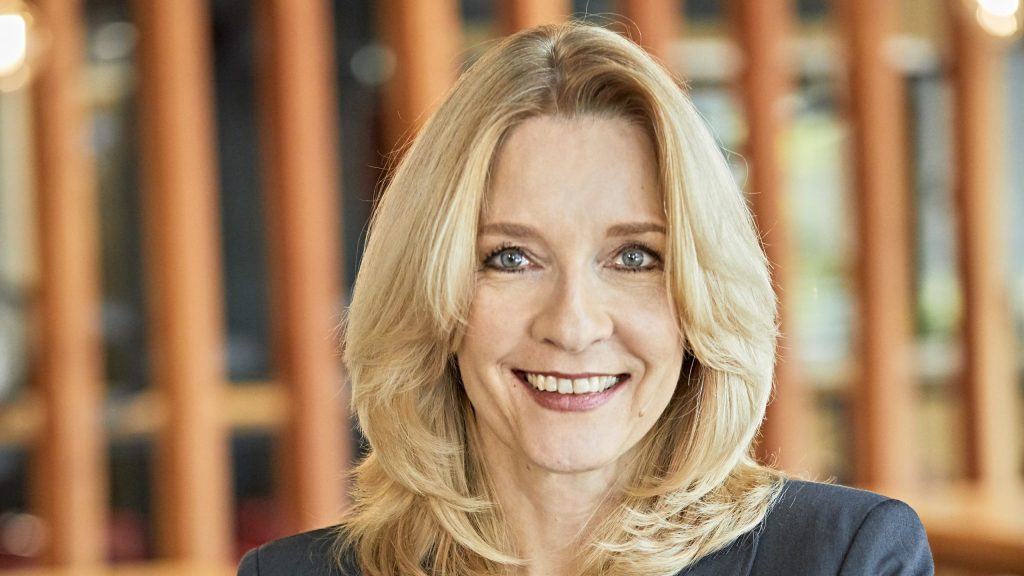
GASTREFERENTIN
BayTM – BAYERN TOURISMUS Marketing GmbH, München
Geschäftsführung
Das Coronavirus hat unsere Branche vor ungeahnte Herausforderungen gestellt. Mit Kreativität und einer schnellen Umsetzung ist es uns jedoch gelungen, Bayern als Reiseland weiterhin positiv in den Köpfen der Menschen zu verankern und die Lust, Bayern zu entdecken, hochzuhalten. Mit unserer anstehenden Raus! Kampagne inspirieren wir diese Menschen mit Ausflugstipps und Routenvorschlägen für einen tatsächlichen Besuch und hoffen, dem Bayerntourismus damit möglichst schnell wieder Aufschwung zu geben.
Barbara Radomski

Das Bayerische Zentrum für Tourismus diskutierte mit seinen Praxis- und Wissenschaftsbeiräten und der Geschäftsführung der BayTM aktuelle und zukünftige Auswirkungen und Handlungsoptionen des bayerischen Tourismus in Zeiten von Corona.
Prof. Dr. Jürgen Schmude stellte hierzu das gemeinsame Forschungs- und Kooperationsprojekt des Bayerischen Zentrums und der Ludwig-Maximilians-Universität zum Thema „Auswirkung externer Schocks auf die Tourismuswirtschaft in Bayern – das Beispiel Corona-Virus“ vor. Kern des Projektes ist die Quantifizierung der ökonomischen Auswirkungen durch die Corona-Krise auf den Tourismus in Bayern. Hier ist eine Zusammenarbeit mit weiteren, in Kürze startenden Corona-Projekten vorgesehen, um zum einen eine Doppelforschung zu vermeiden und zum anderen den Informationsaustausch zu unterstützen, damit auch für die Praxis wertvolle Erkenntnisse generiert werden.
Die Geschäftsführerin der BayTM, Frau Barbara Radomski stellte nach einer Bestandsaufnahme der aktuellen Situation der bayerischen Tourismuswirtschaft die verschiedenen Aktivitäten der BayTM im Kontext der potenziellen Exit-Szenarien und Lockerungsphasen vor. Auch wenn viele Rahmenbedingungen noch unklar sind und in den nächsten Monaten immer wieder Anpassungen zu erwarten sind, sind Marketing und Vertrieb mehr denn je gefragt, um „dem Bayerntourismus möglichst schnell wieder Auftrieb zu geben“. So sollten die Betriebe die Situation auch als Chance begreifen, sich mit der eigenen Profilierung (USP) und neuen Ideen auseinanderzusetzen.
Die anschließende offene Diskussion zum Thema „Re-Opening“ hatte verschiedene thematische Schwerpunkte. Besprochen wurde unter anderem die unterschiedliche Situation für Betriebe je nach Beherbergungsart und die Situation im Bereich der Städte, Tagungs- und Geschäftsreisen. Vor dem Hintergrund der aktuellen Unsicherheiten bzgl. des Buchungs- und Reiseverhaltens des Gastes in den nächsten Monaten und der zu erwartenden Anforderungen der Schutz- und Hygienemaßnahmen für Betriebe und Destinationen, wurde insbesondere die Notwendigkeit einer kontinuierlichen und zielorientierten Gästekommunikation betont. Auch die Frage, ob und wie durch Besucherbegrenzungen oder Lenkungsmaßnahmen insbesondere im öffentlichen Raum ein höheres Maß an Sicherheit erzielt werden kann, wurde diskutiert.
Sie müssen den Inhalt von reCAPTCHA laden, um das Formular abzuschicken. Bitte beachten Sie, dass dabei Daten mit Drittanbietern ausgetauscht werden.
Mehr InformationenBayerisches Zentrum für Tourismus
We firmly believe that the internet should be available and accessible to anyone, and are committed to providing a website that is accessible to the widest possible audience, regardless of circumstance and ability.
To fulfill this, we aim to adhere as strictly as possible to the World Wide Web Consortium’s (W3C) Web Content Accessibility Guidelines 2.1 (WCAG 2.1) at the AA level. These guidelines explain how to make web content accessible to people with a wide array of disabilities. Complying with those guidelines helps us ensure that the website is accessible to all people: blind people, people with motor impairments, visual impairment, cognitive disabilities, and more.
This website utilizes various technologies that are meant to make it as accessible as possible at all times. We utilize an accessibility interface that allows persons with specific disabilities to adjust the website’s UI (user interface) and design it to their personal needs.
Additionally, the website utilizes an AI-based application that runs in the background and optimizes its accessibility level constantly. This application remediates the website’s HTML, adapts Its functionality and behavior for screen-readers used by the blind users, and for keyboard functions used by individuals with motor impairments.
If you’ve found a malfunction or have ideas for improvement, we’ll be happy to hear from you. You can reach out to the website’s operators by using the following email
Our website implements the ARIA attributes (Accessible Rich Internet Applications) technique, alongside various different behavioral changes, to ensure blind users visiting with screen-readers are able to read, comprehend, and enjoy the website’s functions. As soon as a user with a screen-reader enters your site, they immediately receive a prompt to enter the Screen-Reader Profile so they can browse and operate your site effectively. Here’s how our website covers some of the most important screen-reader requirements, alongside console screenshots of code examples:
Screen-reader optimization: we run a background process that learns the website’s components from top to bottom, to ensure ongoing compliance even when updating the website. In this process, we provide screen-readers with meaningful data using the ARIA set of attributes. For example, we provide accurate form labels; descriptions for actionable icons (social media icons, search icons, cart icons, etc.); validation guidance for form inputs; element roles such as buttons, menus, modal dialogues (popups), and others. Additionally, the background process scans all the website’s images and provides an accurate and meaningful image-object-recognition-based description as an ALT (alternate text) tag for images that are not described. It will also extract texts that are embedded within the image, using an OCR (optical character recognition) technology. To turn on screen-reader adjustments at any time, users need only to press the Alt+1 keyboard combination. Screen-reader users also get automatic announcements to turn the Screen-reader mode on as soon as they enter the website.
These adjustments are compatible with all popular screen readers, including JAWS and NVDA.
Keyboard navigation optimization: The background process also adjusts the website’s HTML, and adds various behaviors using JavaScript code to make the website operable by the keyboard. This includes the ability to navigate the website using the Tab and Shift+Tab keys, operate dropdowns with the arrow keys, close them with Esc, trigger buttons and links using the Enter key, navigate between radio and checkbox elements using the arrow keys, and fill them in with the Spacebar or Enter key.Additionally, keyboard users will find quick-navigation and content-skip menus, available at any time by clicking Alt+1, or as the first elements of the site while navigating with the keyboard. The background process also handles triggered popups by moving the keyboard focus towards them as soon as they appear, and not allow the focus drift outside it.
Users can also use shortcuts such as “M” (menus), “H” (headings), “F” (forms), “B” (buttons), and “G” (graphics) to jump to specific elements.
We aim to support the widest array of browsers and assistive technologies as possible, so our users can choose the best fitting tools for them, with as few limitations as possible. Therefore, we have worked very hard to be able to support all major systems that comprise over 95% of the user market share including Google Chrome, Mozilla Firefox, Apple Safari, Opera and Microsoft Edge, JAWS and NVDA (screen readers).
Despite our very best efforts to allow anybody to adjust the website to their needs. There may still be pages or sections that are not fully accessible, are in the process of becoming accessible, or are lacking an adequate technological solution to make them accessible. Still, we are continually improving our accessibility, adding, updating and improving its options and features, and developing and adopting new technologies. All this is meant to reach the optimal level of accessibility, following technological advancements. For any assistance, please reach out to
Sie sehen gerade einen Platzhalterinhalt von Chatbase. Um auf den eigentlichen Inhalt zuzugreifen, klicken Sie auf die Schaltfläche unten. Bitte beachten Sie, dass dabei Daten an Drittanbieter weitergegeben werden.
Mehr InformationenSie sehen gerade einen Platzhalterinhalt von Facebook. Um auf den eigentlichen Inhalt zuzugreifen, klicken Sie auf die Schaltfläche unten. Bitte beachten Sie, dass dabei Daten an Drittanbieter weitergegeben werden.
Mehr InformationenSie sehen gerade einen Platzhalterinhalt von Instagram. Um auf den eigentlichen Inhalt zuzugreifen, klicken Sie auf die Schaltfläche unten. Bitte beachten Sie, dass dabei Daten an Drittanbieter weitergegeben werden.
Mehr InformationenSie sehen gerade einen Platzhalterinhalt von reCAPTCHA. Um auf den eigentlichen Inhalt zuzugreifen, klicken Sie auf die Schaltfläche unten. Bitte beachten Sie, dass dabei Daten an Drittanbieter weitergegeben werden.
Mehr InformationenSie sehen gerade einen Platzhalterinhalt von X. Um auf den eigentlichen Inhalt zuzugreifen, klicken Sie auf die Schaltfläche unten. Bitte beachten Sie, dass dabei Daten an Drittanbieter weitergegeben werden.
Mehr Informationen