JAHRESTAGUNG
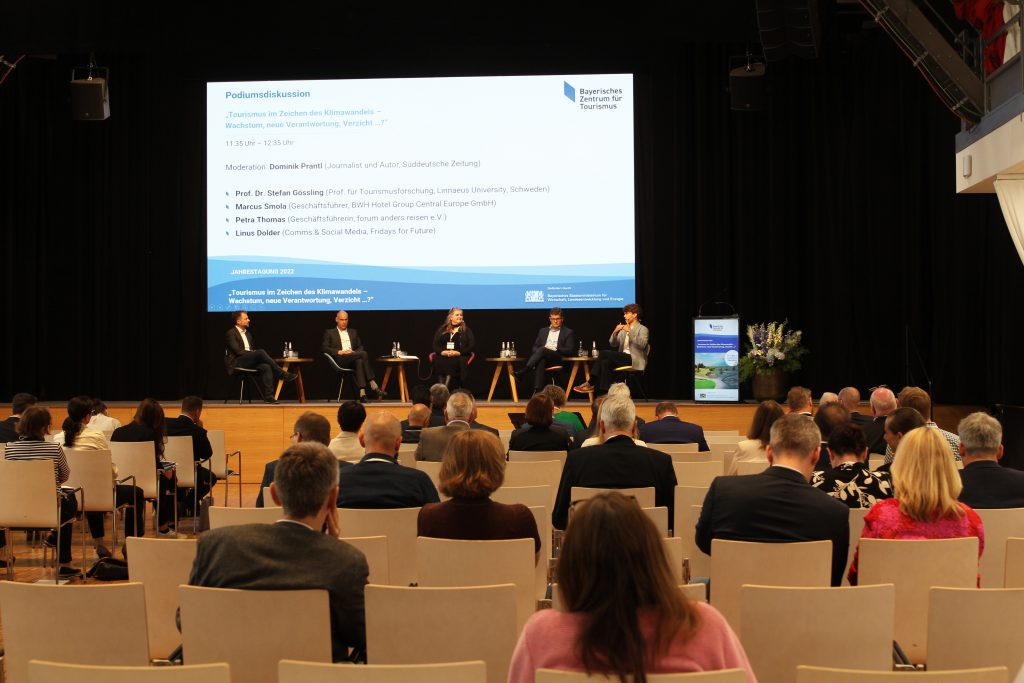
Tourismus im Zeichen des Klimawandels – Wachstum, neue Verantwortung, Verzicht …?
17. und 18. Mai 2022 im marinaforum, Regensburg
© Anna-Carla Brokof (BZT)
Der Klimawandel und die sich damit verändernden Rahmenbedingungen wirken sich sehr unterschiedlich auf den Tourismus aus. In vielen Destinationen ist der Tourismus durch den Klimawandel gefährdet – sei es durch generell steigende Temperaturen, Extremwetterereignisse wie Hochwasser oder Dürre oder mangelnde Schneesicherheit in Wintersportorten. Wie kann eine erfolgreiche Zukunft für den bayerischen Tourismus aussehen? Welche Herausforderungen – aber auch Chancen – bringt der Klimawandel für Betriebe und Destinationen mit sich? Welche Anpassungen und Veränderungen sind für die Akteure im Tourismus möglich und nötig?
Die zweitägige Konferenz behandelte diese Aspekte und Fragen in moderierten Diskussionen, Workshops und Vorträgen. Dabei legten wir besonderen Wert auf die Ausgewogenheit zwischen den Stimmen der Wissenschaft und der Politik sowie den Erfahrungen und der Expertise aus der Praxis.
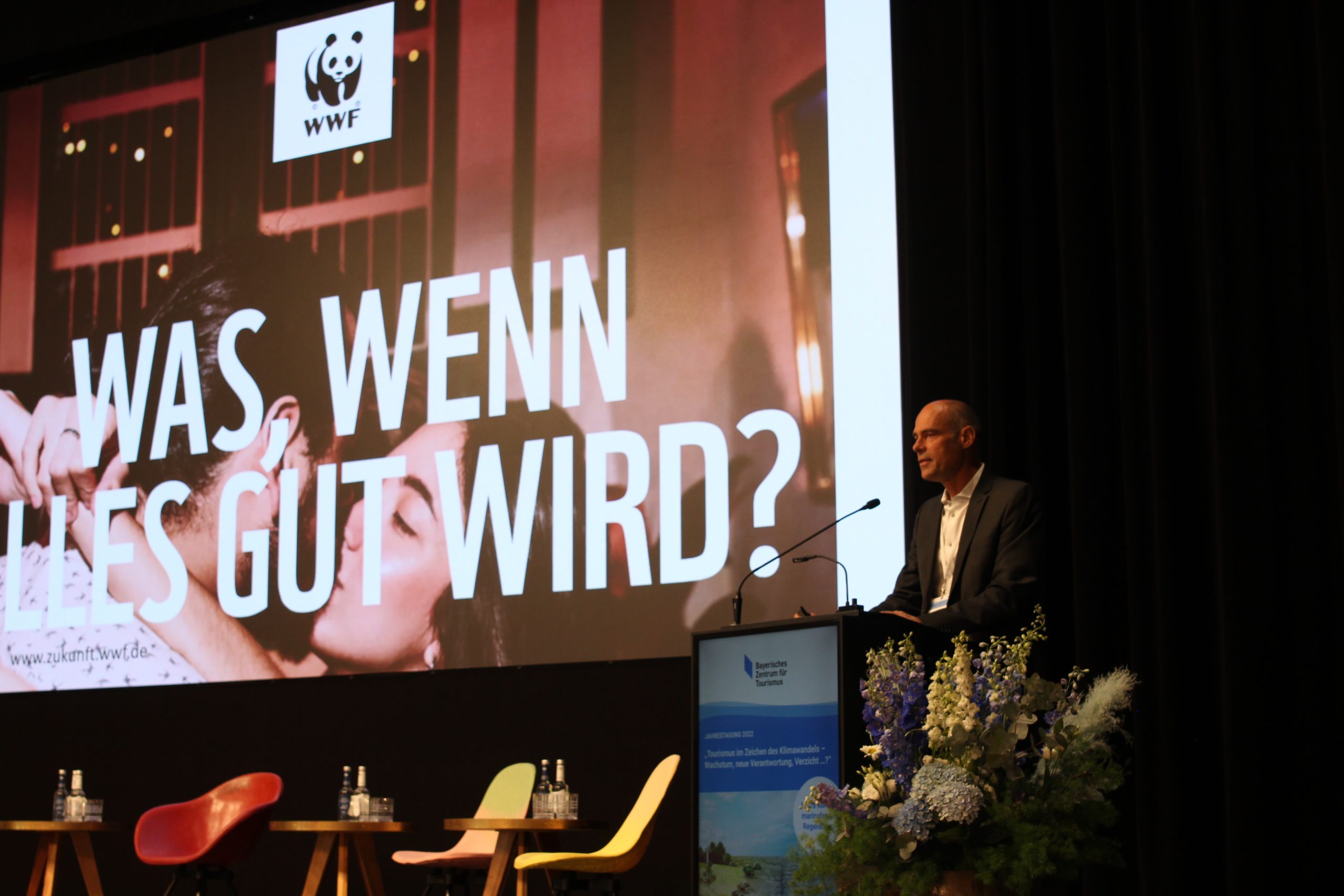

Impulsvorträge
Die Referent/innen blickten aus ihrer beruflichen Perspektive auf das Thema Klimawandel im Tourismus und führten auf, inwiefern sie sich generell mit der Komplexität der Thematik befassen, auf die Klimawandelfolgen blicken und Anpassungsmaßnahmen umsetzen. Geladen war je eine Vertreterin/ein Vertreter aus fünf unterschiedlichen Marktsegmenten.
Städtetourismus
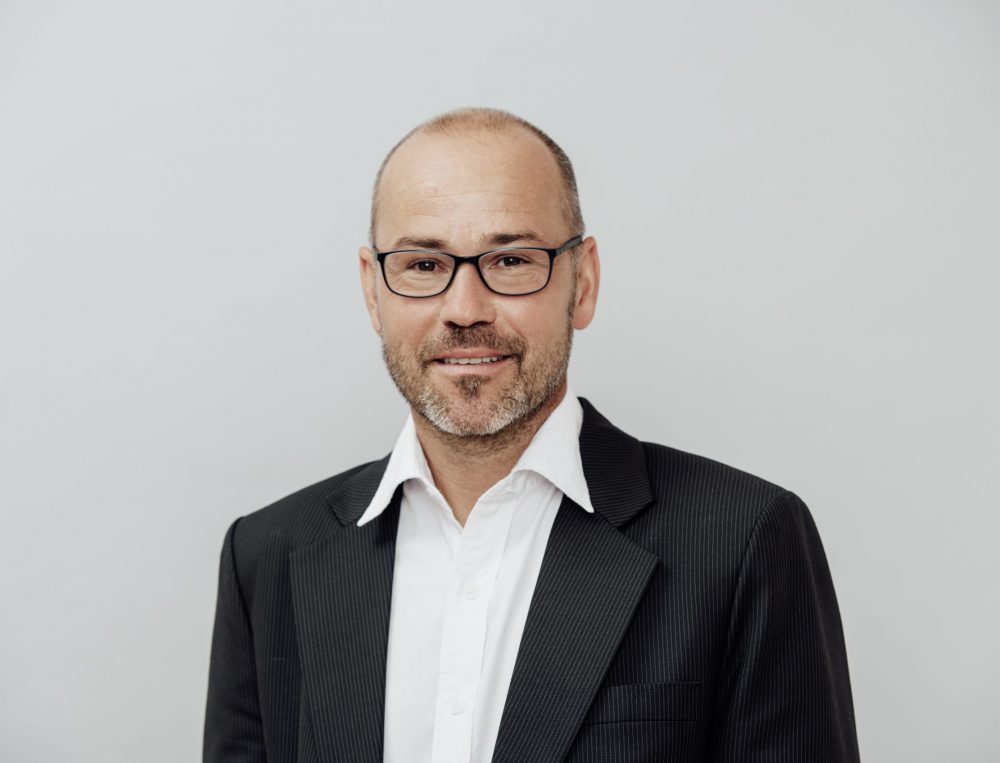
Ralf Zednik
Leiter Marktforschung, Referat für Arbeit und Wirtschaft
München Tourismus
Reiseveranstalter
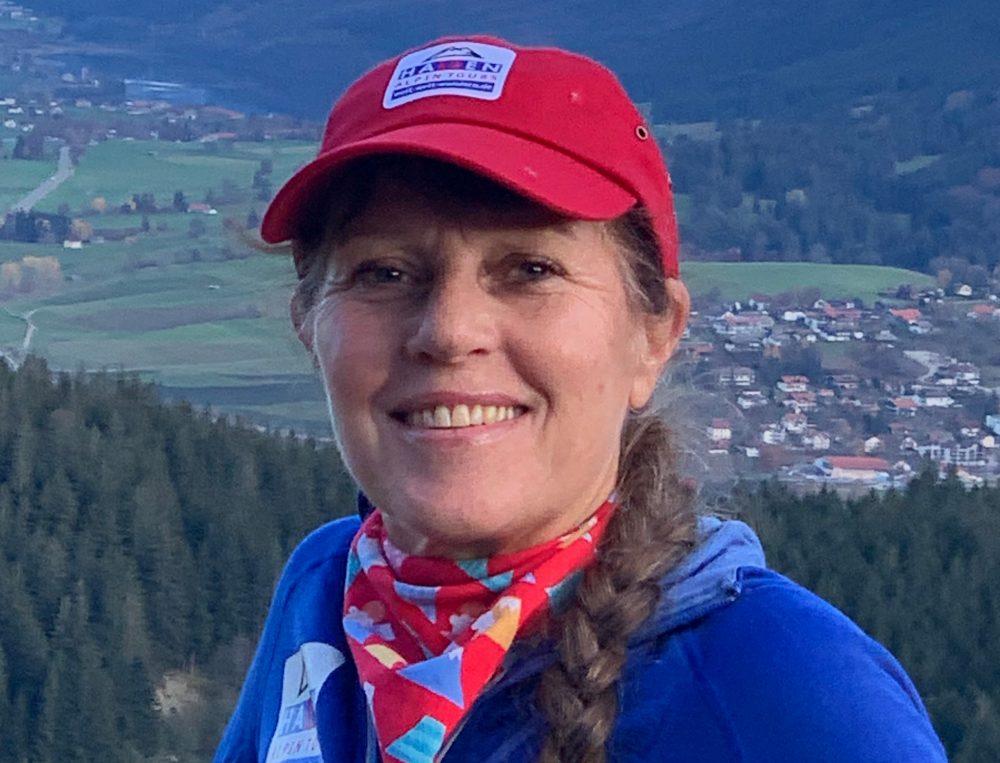
Rita Hagen
Gründerin und Geschäftsführerin
Hagen Alpin Tours
Hotellerie/Gastronomie
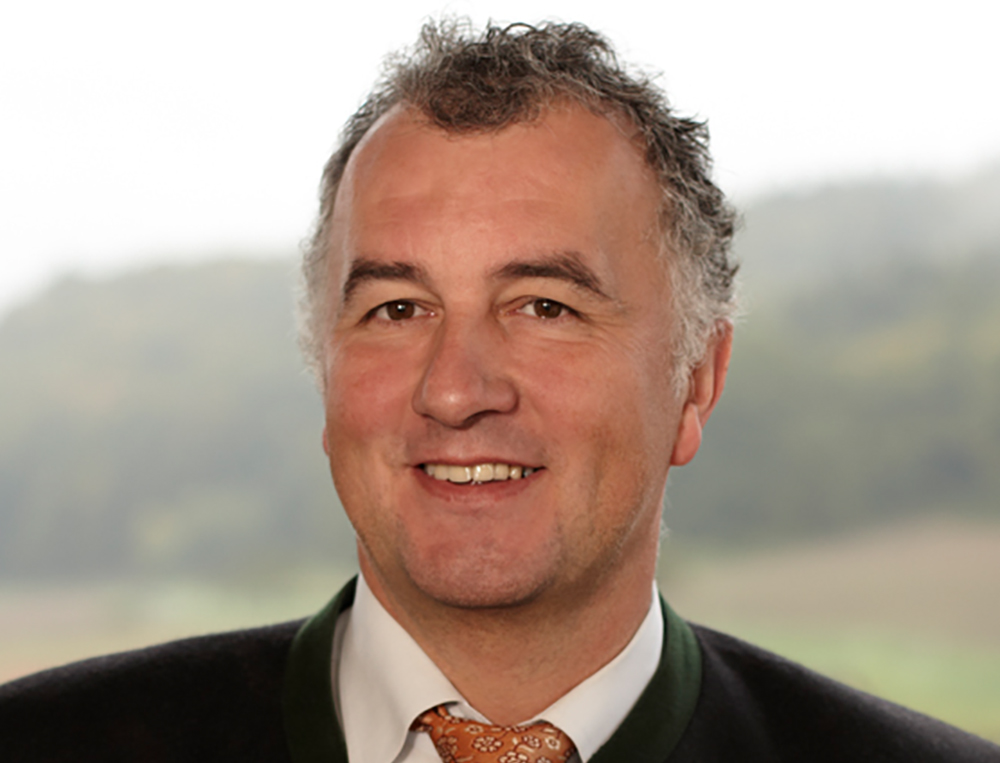
Hans-Jürgen Nägerl
Geschäftsführer
Landhotel Weißes Roß und
Bezirksvorsitzender
DEHOGA Bayern
Destination
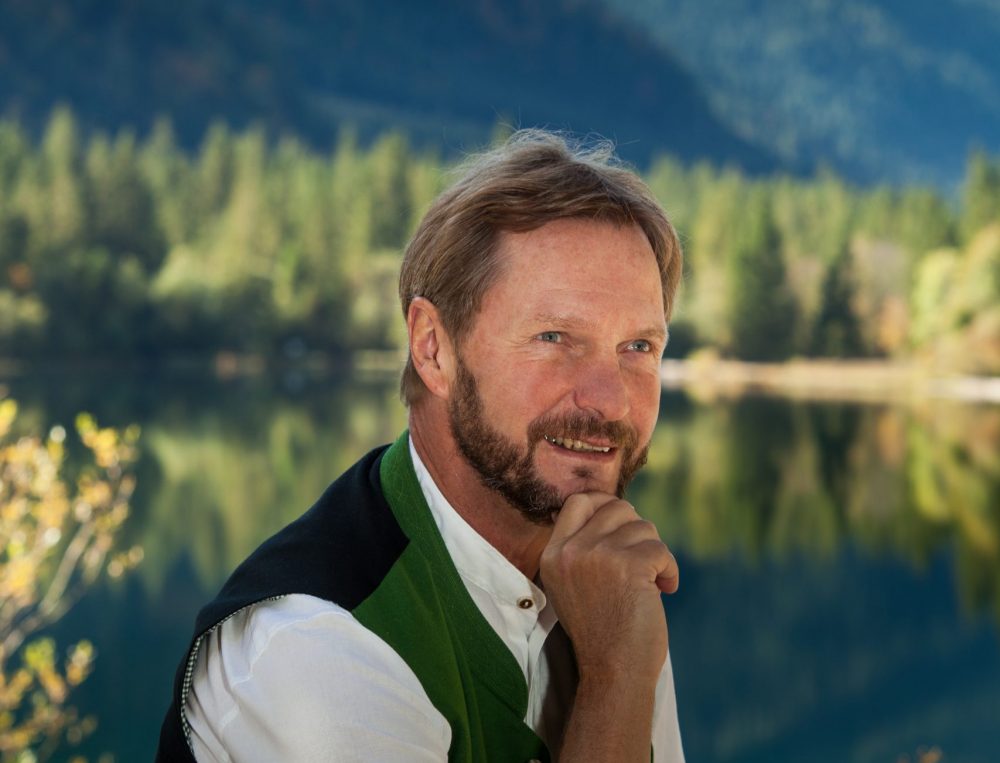
Fritz Rasp
Projektmanagement
Bergsteigerdorf Ramsau
Mobilität
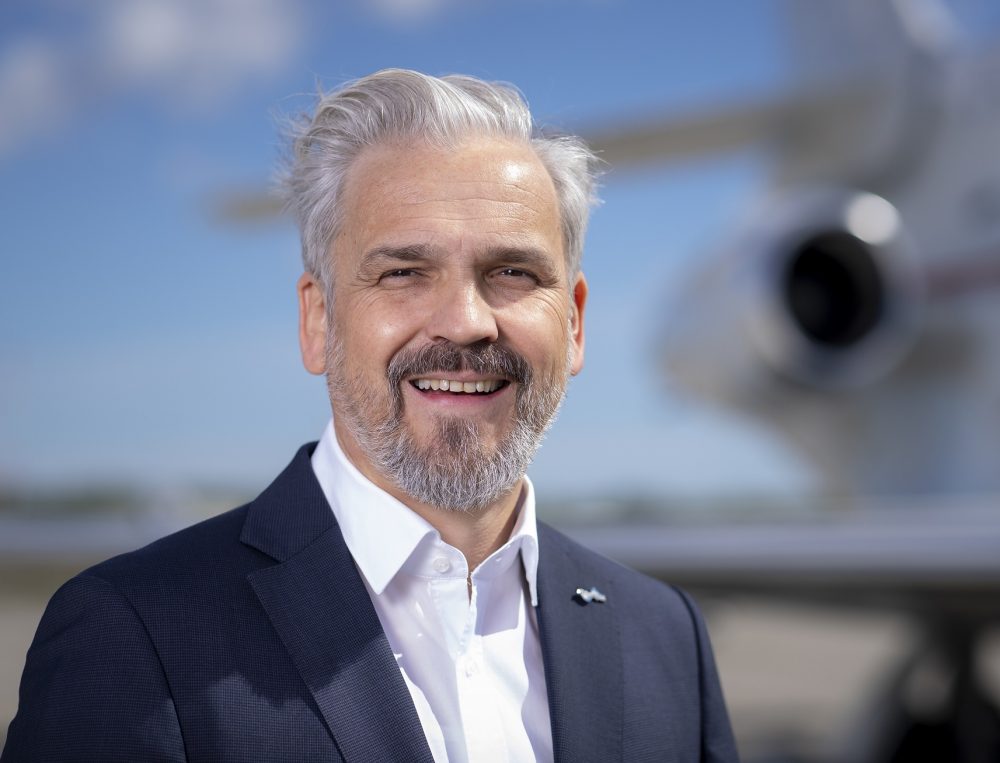
Ralf Schmid
CEO
Flughafen Memmingen GmbH und
stellv. Vorsitzender
IDRF – Interessengemeinschaft der regionalen Flugplätze e.V.
Break-Out-Sessions
In den Break-Out-Sessions diskutierten die Teilnehmenden der Jahrestagung konkrete Projekte und Maßnahmen, um vor dem Hintergrund des Klimawandels eine neue Verträglichkeit in ausgewählten touristischen Segmenten zu erreichen. Insgesamt gab es fünf Break-Out-Sessions zu den Segmenten „Städtetourismus“, „Destination“, „Hotellerie und Gastronomie“, „Reiseveranstalter“ und „Mobilität“. Als Workshoptechnik wurde die Walt-Disney-Methode gewählt. Im Ergebnis entstand sessionübergreifend ein thematischer Ideenspeicher. Die Impulse der Teilnehmenden der Break-Out-Sessions lassen sich in sechs Themenbereiche zusammenfassen. Sie bieten erste Ansatzpunkte für künftige Projekte der Wissenschaft und Praxis und können den Teilnehmenden und Nicht-Teilnehmenden der Jahrestagung als Inspiration für ihre Arbeit dienen.
- Beteiligung von Bürger*innen
- Einbindung des Tourismus in städtische Gestaltungsprozesse
- Digitale Vernetzung der Akteur*innen
- Regionale Vermarktung
- Kreislaufwirtschaft
- Synergien und Entwicklungspartnerschaften Stadt und Land
- Alternativen zum motorisierten Individualverkehr
- Angebote von Sharing Economies
- Belohnungssysteme bei klimafreundlicher Anreise
- Autofreie Zonen
- Vernetzte Mobilitätsstationen
- On-Demand Angebote (z. B. Rufbusse)
- Verkehrsverbünde/Mobilitätsnetzwerke (Zusammenarbeit von Mobilitätsanbietern)
- Einzelbetriebliche Maßnahmen und Verantwortung der Betriebe
- Umsetzung von blauer und grüner Infrastruktur
- Maßnahmen zur Hitzeanpassung
- Nachhaltige Energie
- CO2-Kompensation von Reisen
- Respekt für Naturräume
- Schaffung rechtlicher Rahmenbedingungen
- Integration der Tourismusbranche in Entscheidungsprozesse
- Beschleunigung von Entscheidungsprozessen
- Bereitstellung von finanziellen Mittel für Transformation und Umbau
- Mehrwert für Kund*innen (Einheimische und Gäste)
- Mehrwert für andere Unternehmen
- Transparenz innerhalb der Netzwerke
- Transparenz gegenüber Kund*innen (z.B. Preise, Angebote)
- Proaktiver Einsatz für Tourismusakzeptanz
- Gemeinwohlökonomie (Mehrwert für die Gesellschaft)
- Verständnis als Lebenszeit- und Lebensraumgestalter
Moderation und Grußworte
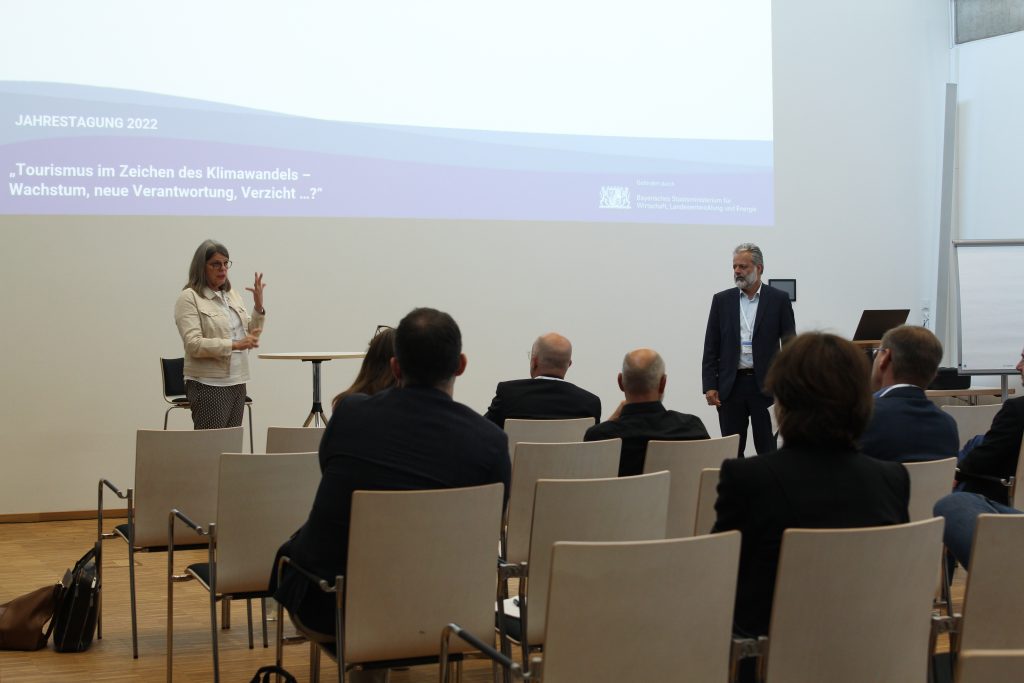
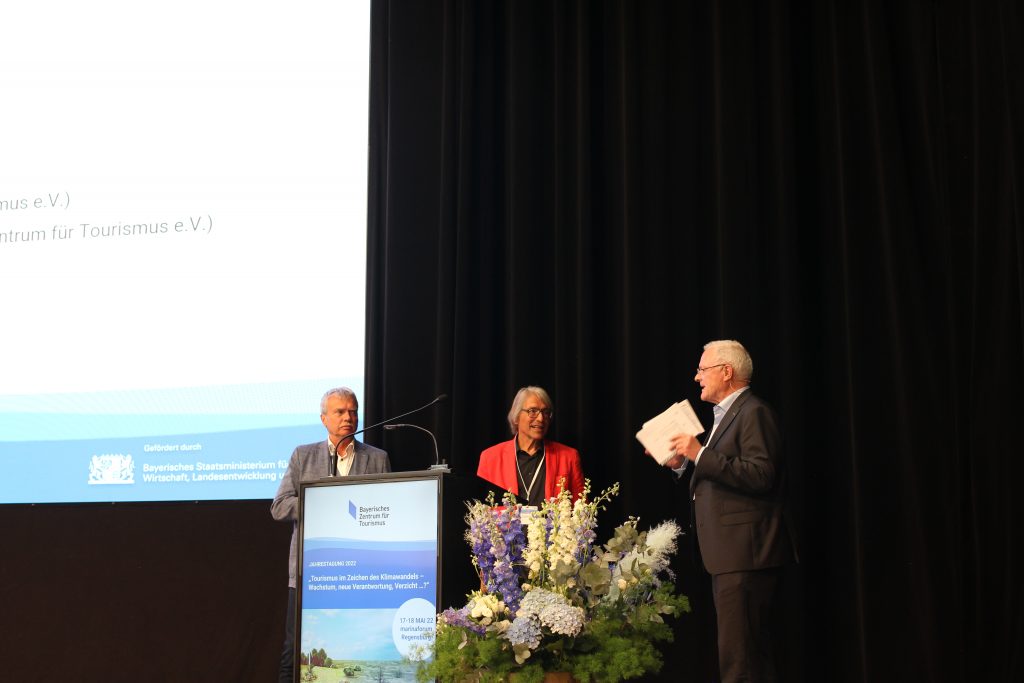
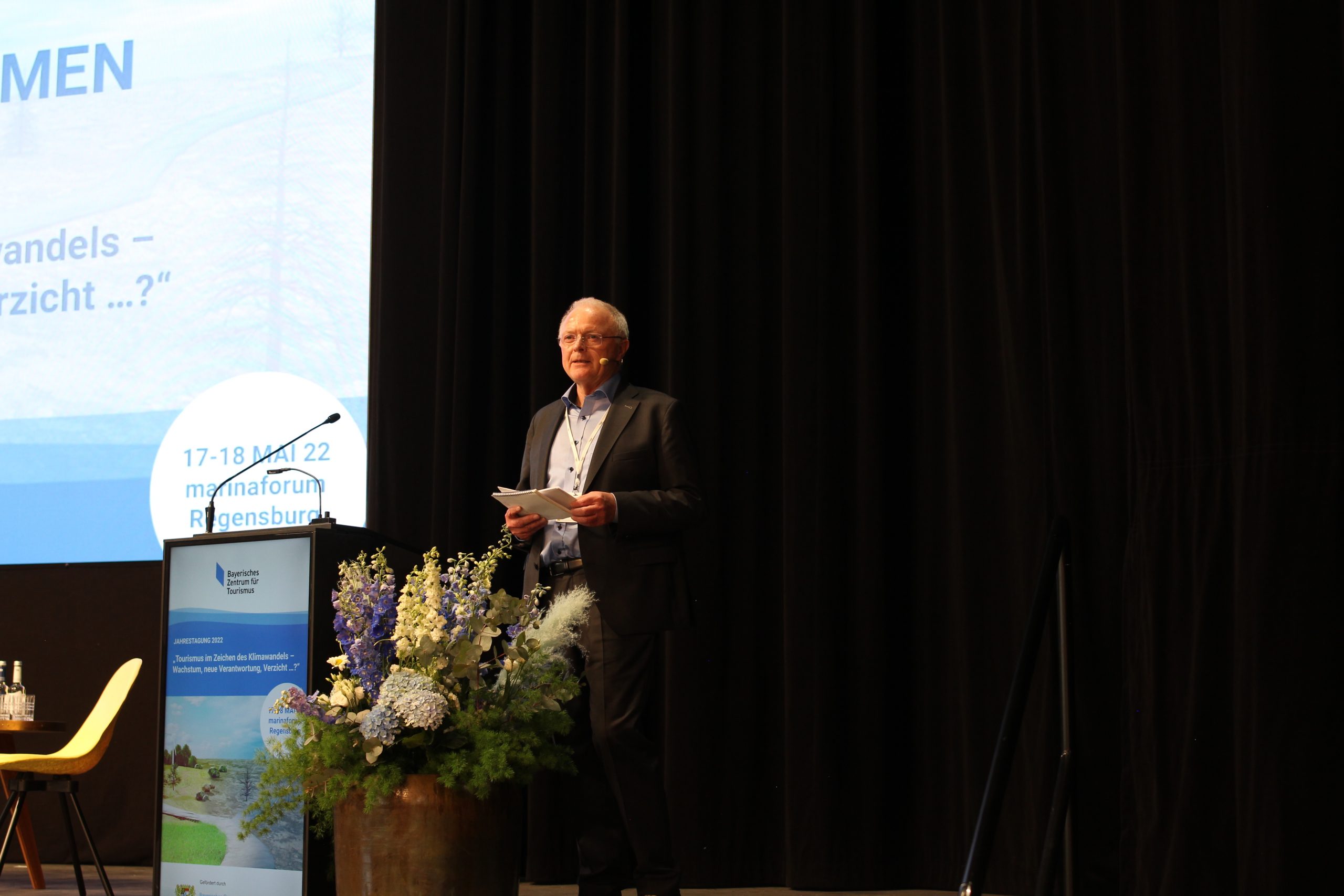
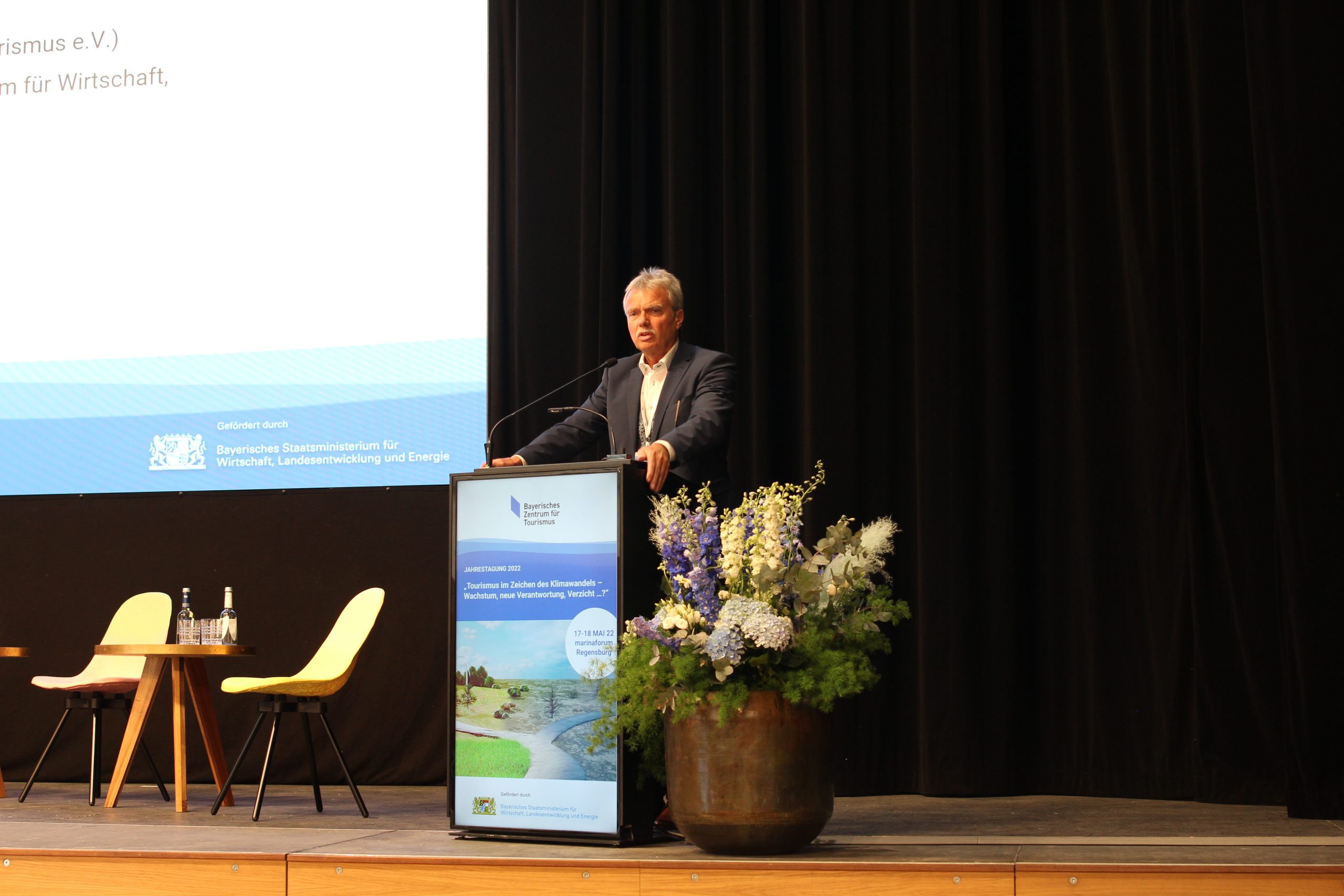
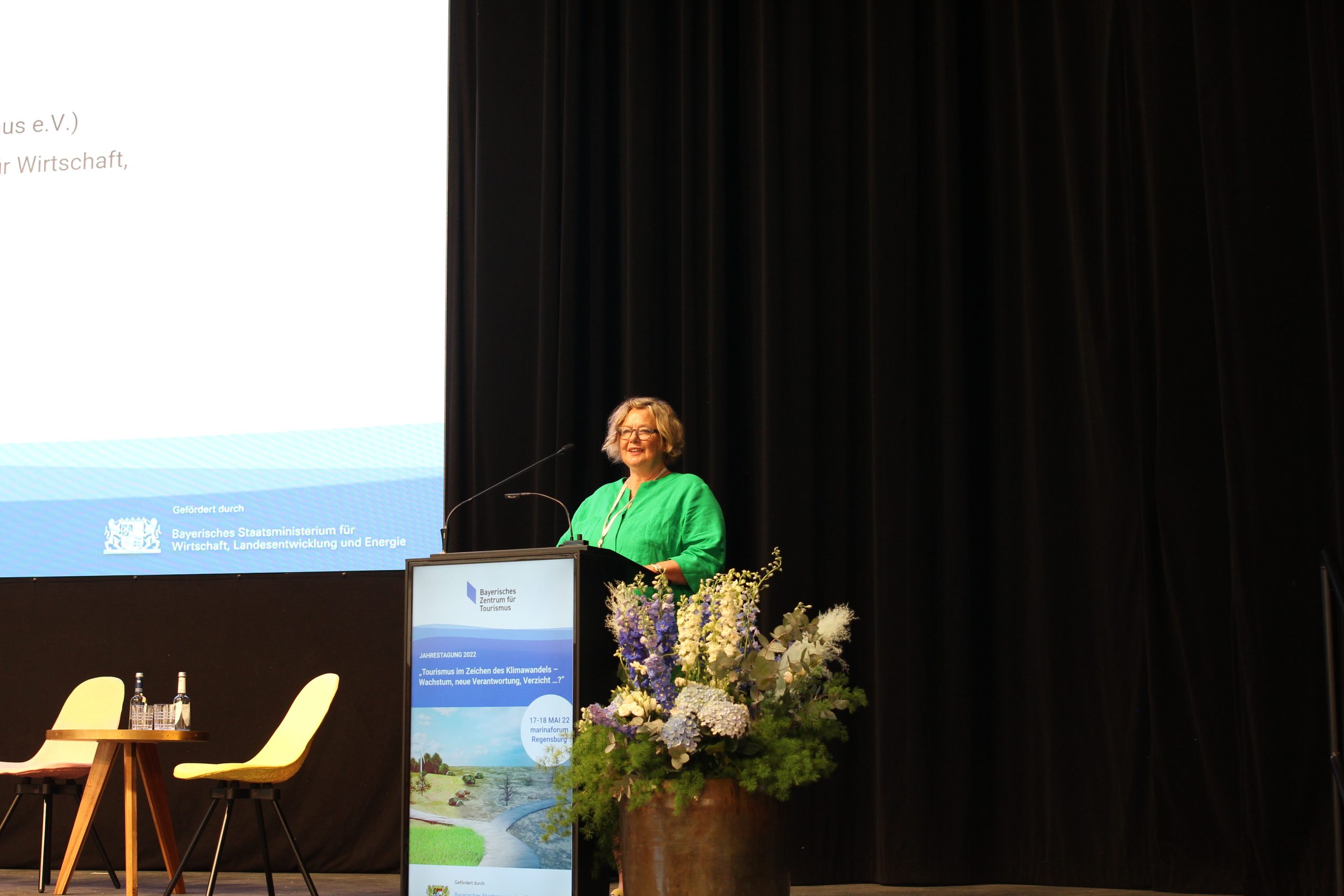
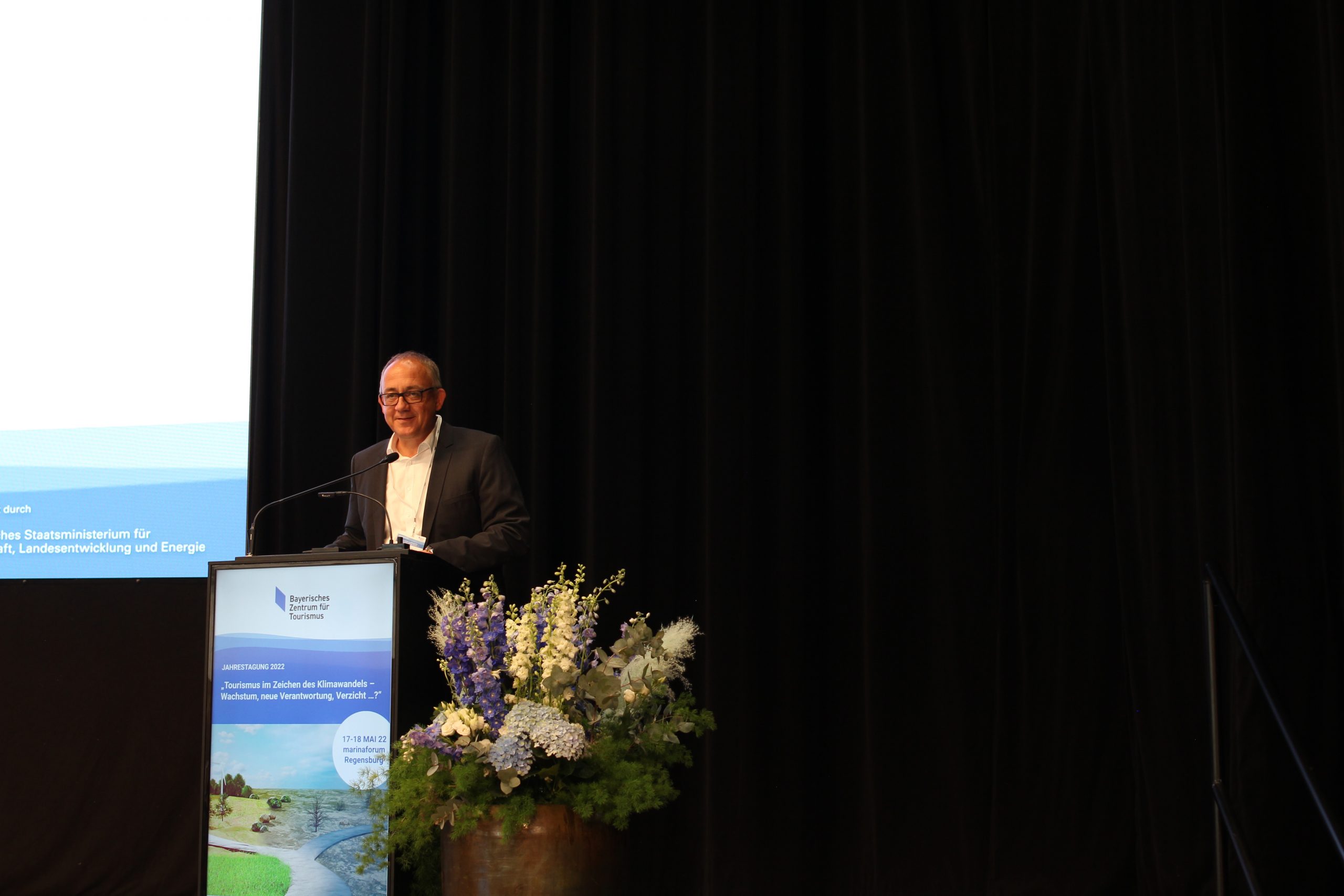
Dr. Wolfgang Isenberg moderierte die zweitägige Tagung. Nach der Grußadresse des BZT-Vorsitzenden Prof. Dr. Alfred Bauer hob Dr. Ulrike Wolf, Ministerialdirektorin im Bayerischen Staatsministerium für Wirtschaft, Landesentwicklung und Energie, die Bedeutung des Themenkomplexes „Nachhaltigkeit“ für die touristische Zukunft des Freistaats Bayern hervor. Ebenso stimmte am Folgetag Dr. Michael Braun, Geschäftsführender Vorstand des Tourismusverbands Ostbayern e.V., die Teilnehmenden der Jahrestagung auf die Bedeutung von Nachhaltigkeitsinitiativen im Tourismus ein.
Sessions
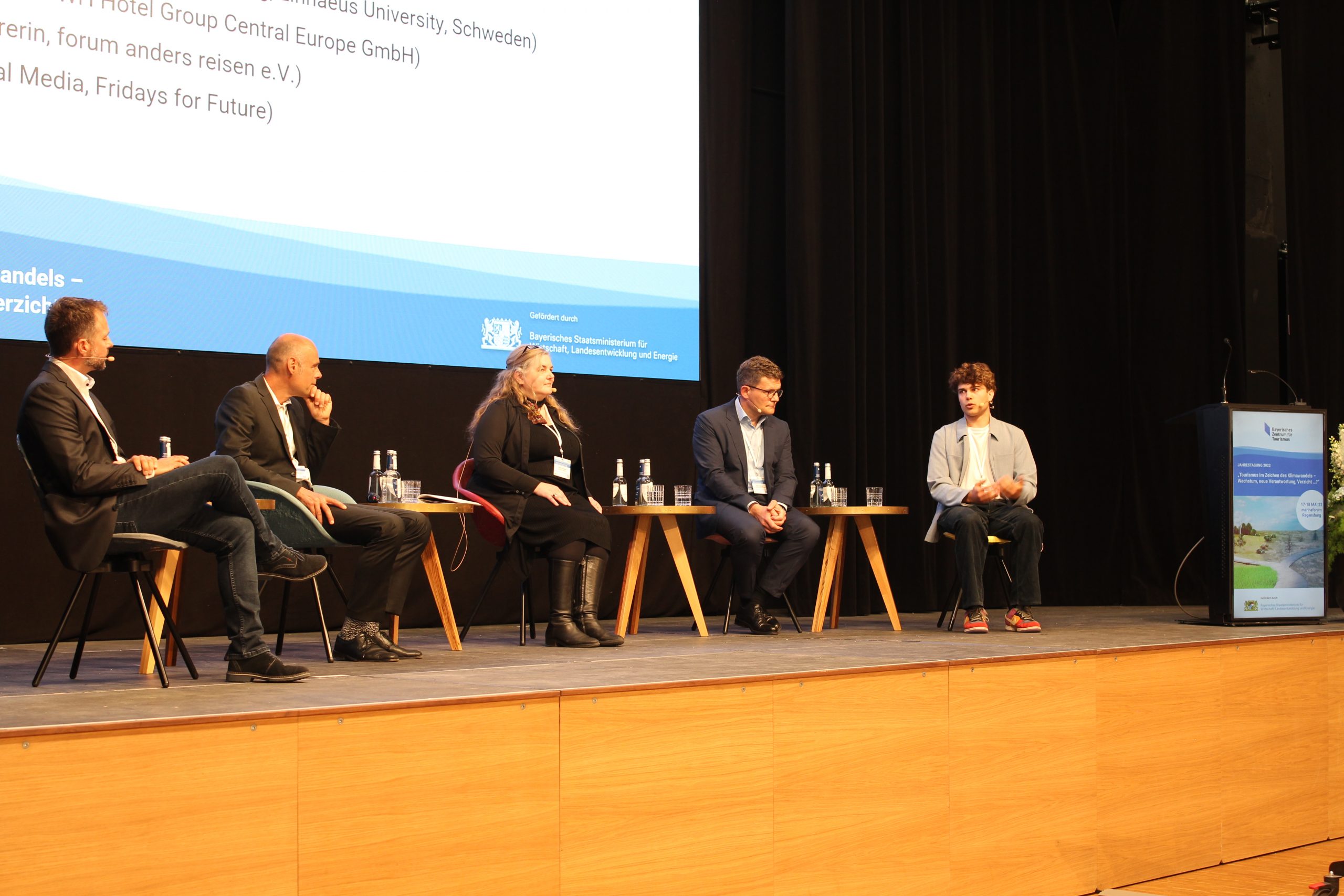
Insgesamt vier Sessions beleuchteten ein Thema, zu dem die Referierenden aus Wissenschaft und Praxis mit ihren Vorträgen den Einstieg gaben, um anschließend mit den Teilnehmenden in eine weiterführende Diskussion einzusteigen.
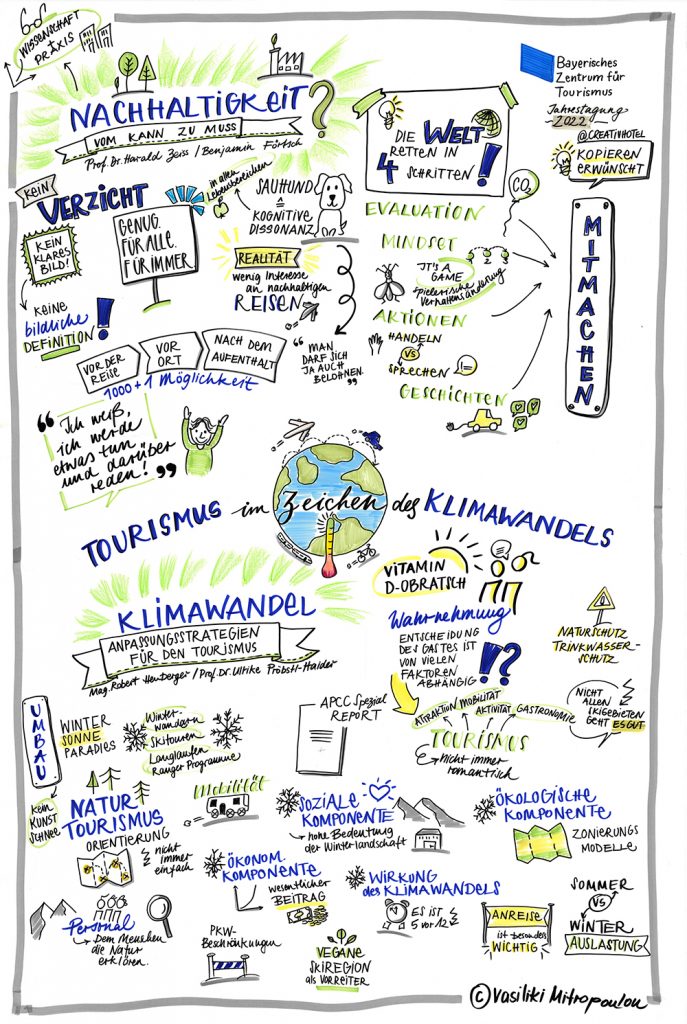
Nachhaltigkeit: Von „kann“ zu „muss“?
Prof. Dr. Harald Zeiss
Professor für Tourismusmanagement und Betriebswirtschaft mit Schwerpunkt internationaler Tourismus und Nachhaltigkeit
Hochschule Harz

Benjamin Förtsch
Geschäftsführer
Creativhotel Luise Erlangen
Klimawandel: Anpassungsstrategien für den Tourismus

Prof. Dr. Ulrike Pröbstl-Haider
stellv. Leiterin
Institut für Landschaftsentwicklung, Erholungs- und Naturschutzplanung
Universität für Bodenkultur Wien
Mag. Robert Heuberger
Naturparkmanager
Naturpark Dobratsch
Kärnten, Österreich
Resilienz: Nach der Krise ist vor der Krise?
Prof. Dr. Harald Pechlaner
Lehrstuhlinhaber Tourismus und Leiter des Zentrums für Entrepreneurship
Katholische Universität Eichstätt-Ingolstadt
Yvonne Coulin
Geschäftsführerin
Congress- und Tourismus-Zentrale Nürnberg
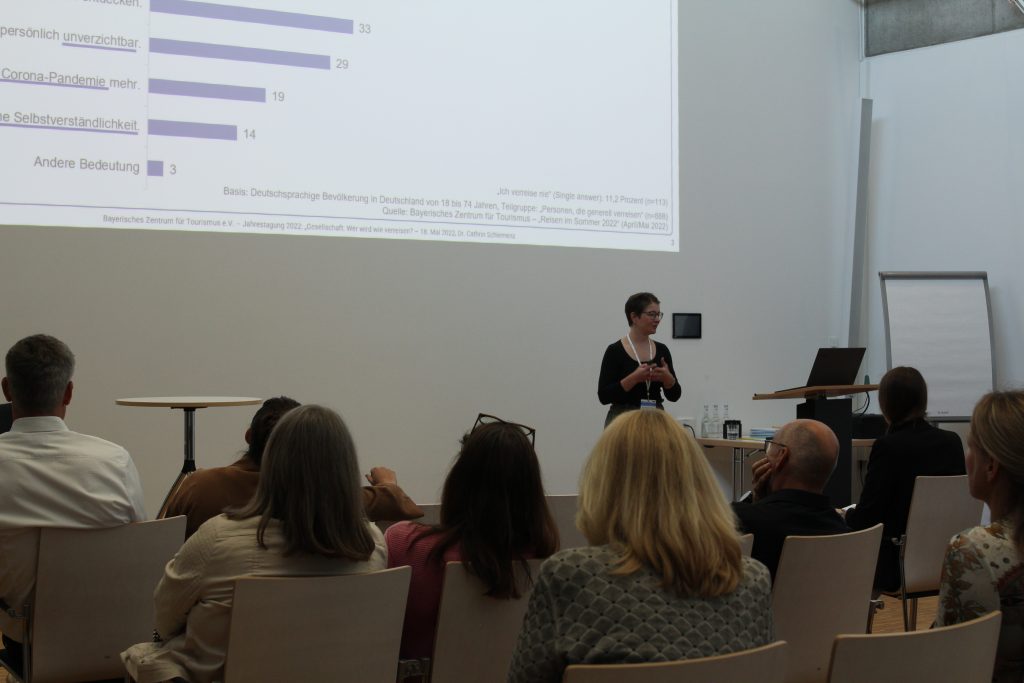
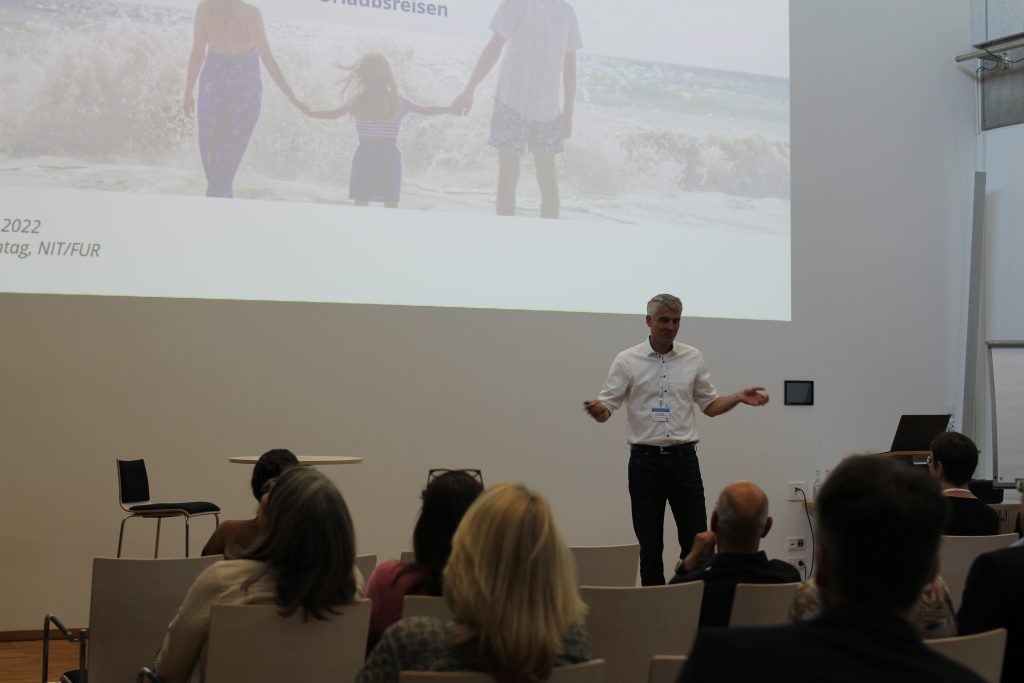
Gesellschaft: Wer wird wie verreisen?

Dr. Cathrin Schiemenz
Projektmanagerin für Zielgruppen
Bayerisches Zentrum für Tourismus

Ulf Sonntag
Geschäftsführer
NIT – Institut für Tourismus- und Bäderforschung in Nordeuropa GmbH und
Projektleiter
Reiseanalyse, FUR – Forschungsgemeinschaft Urlaub und Reisen e.V.
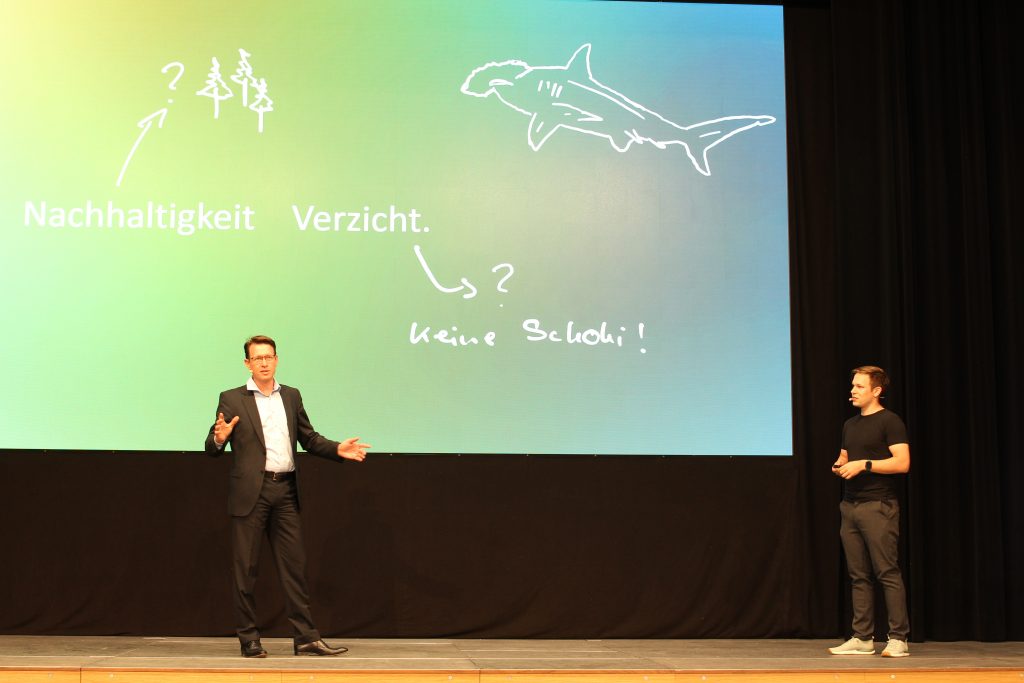
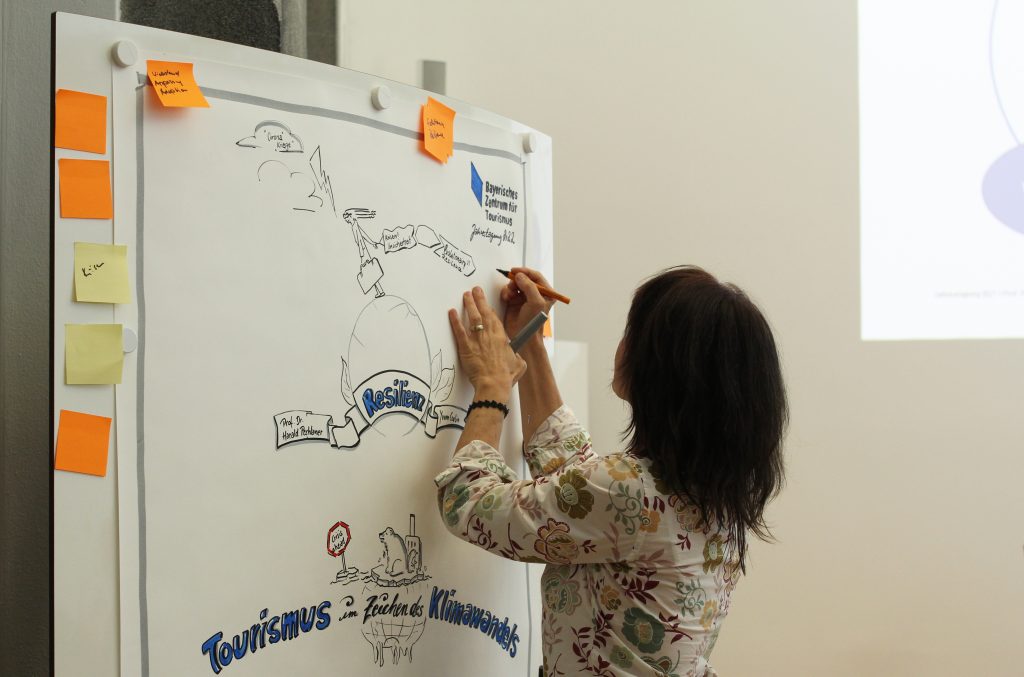
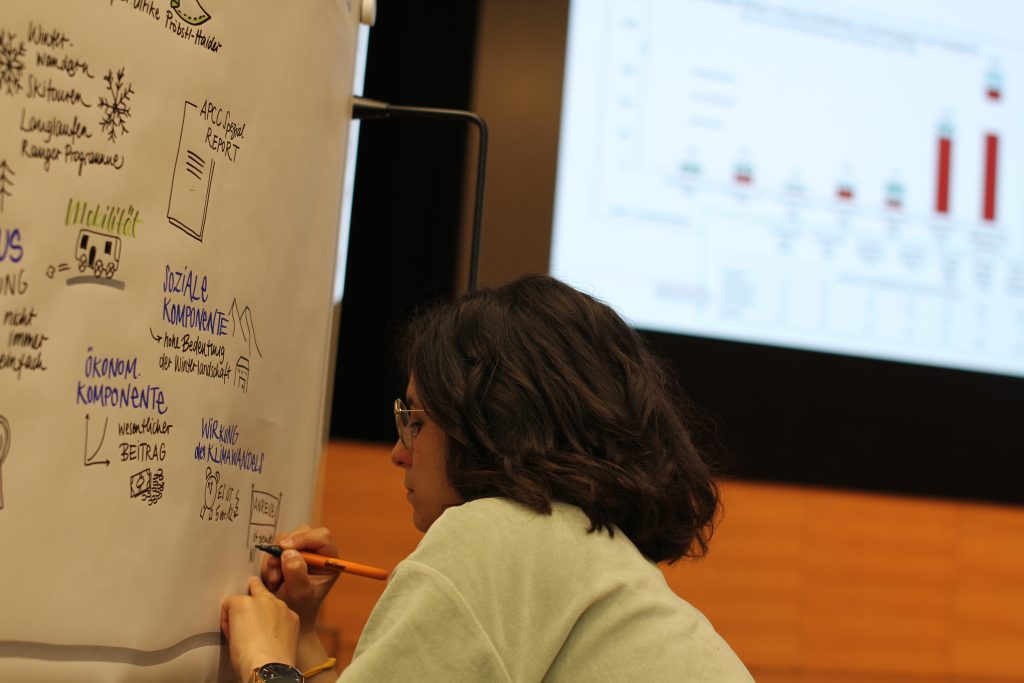
Graphic Recording
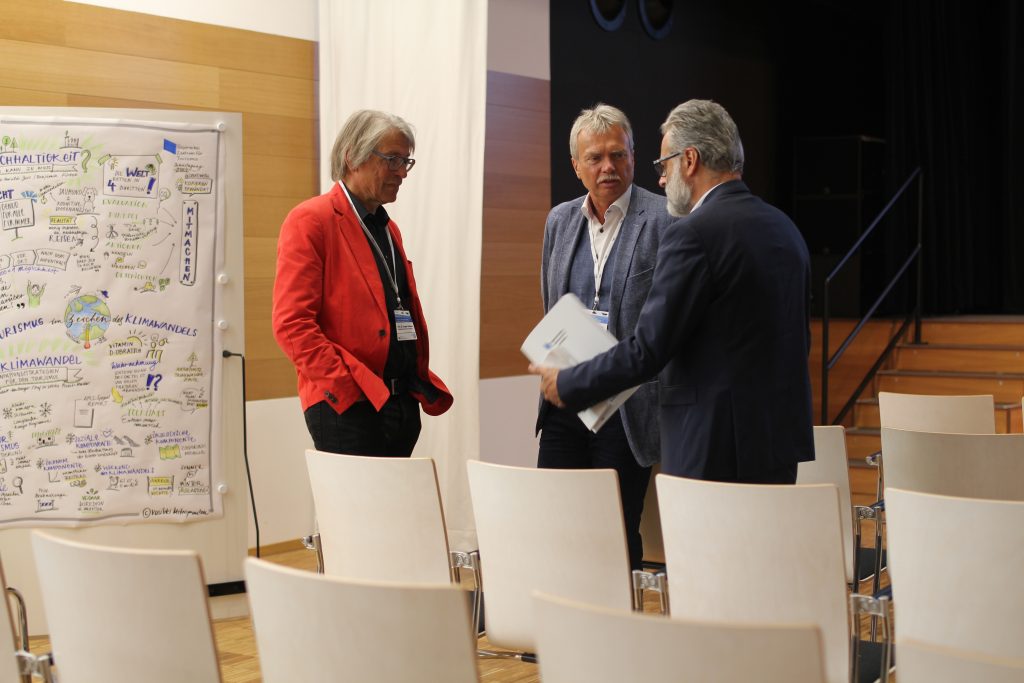
Ein Graphic-Recording-Team visualisierte die Inhalte der vier Workshops grafisch live vor Ort.

Vortrag
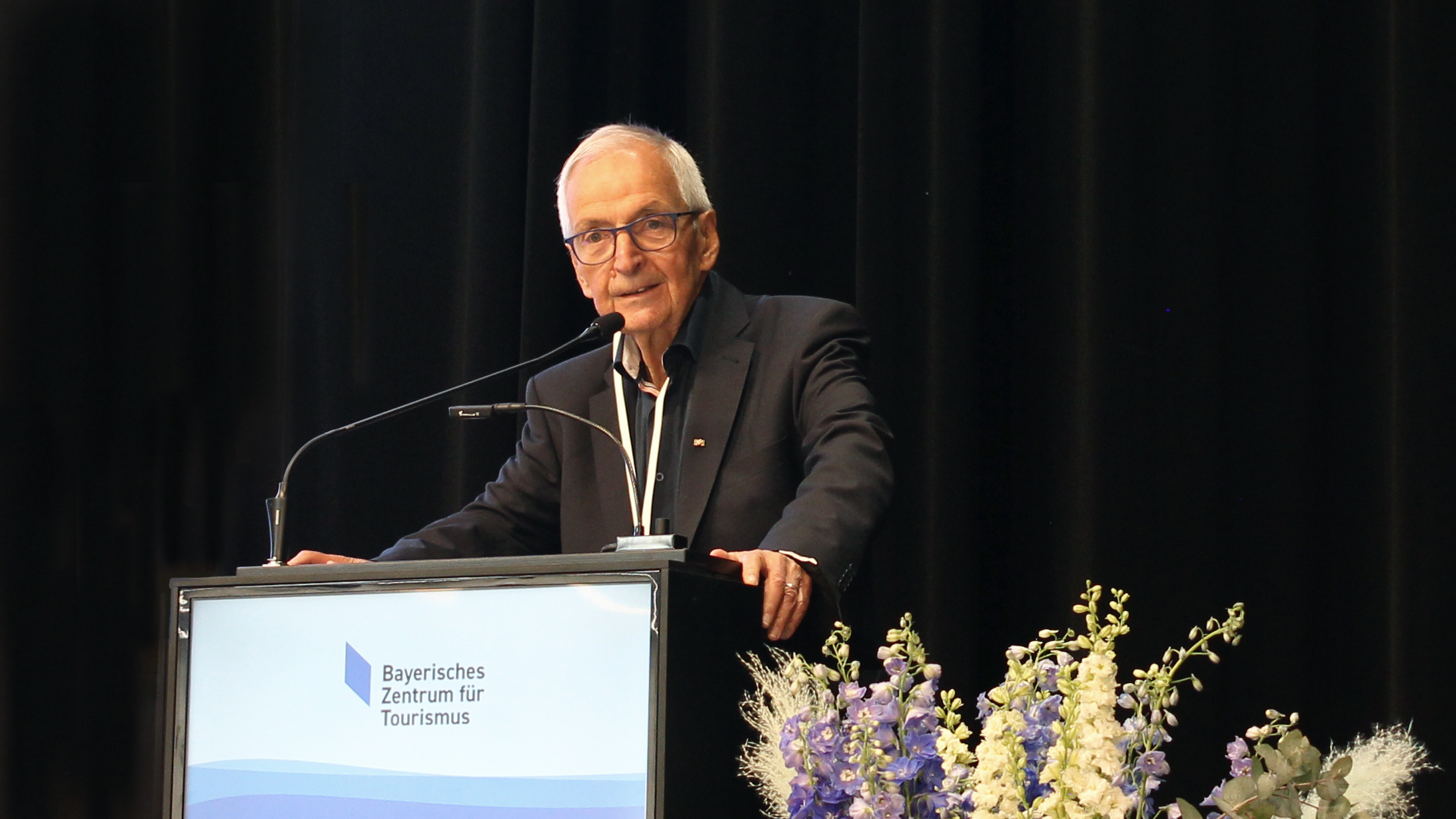
Zum Abschluss der Tagung sprach Prof. Dr. Klaus Töpfer. Er betonte, dass der Tourismus ein Kind der Zeit sei und damit von Zeitenwenden betroffen. Dem Tourismus riet Prof. Dr. Töpfer, Regionalität amateurhaft professionell zu vermarkten.
© Anna-Carla Brokof (BZT)
Prof. Dr. Klaus Töpfer
„In der Zeit der Zeitenwenden: Zeitenwende auch im Tourismus?“
ehem. Bundesumweltminister, ehemaliger Exekutivdirektor des Umweltprogramms der Vereinten Nationen (UNEP)
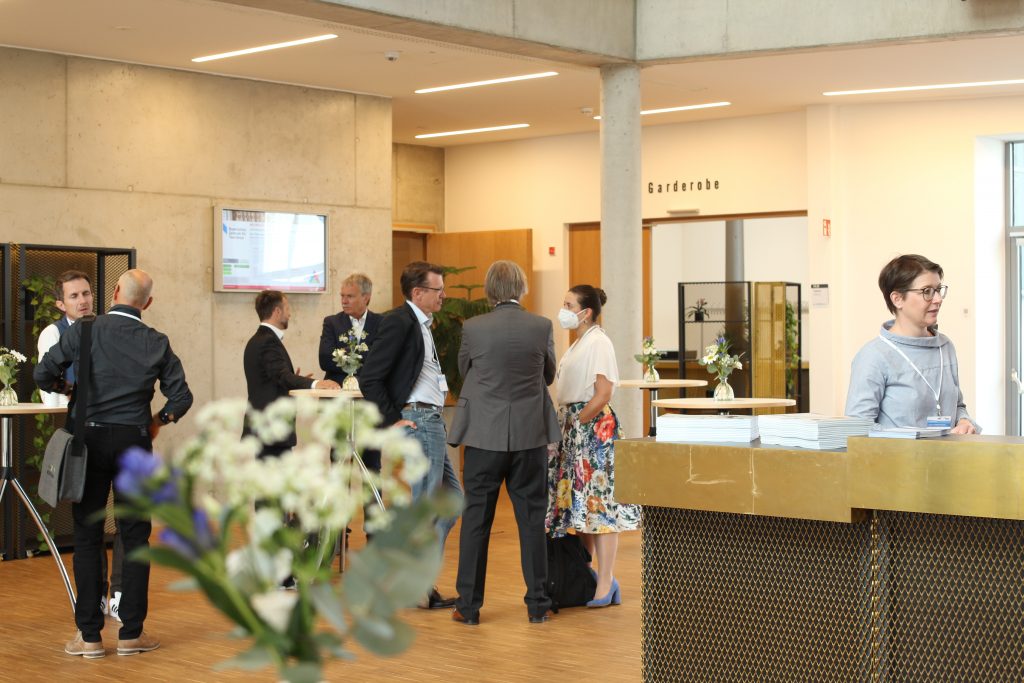
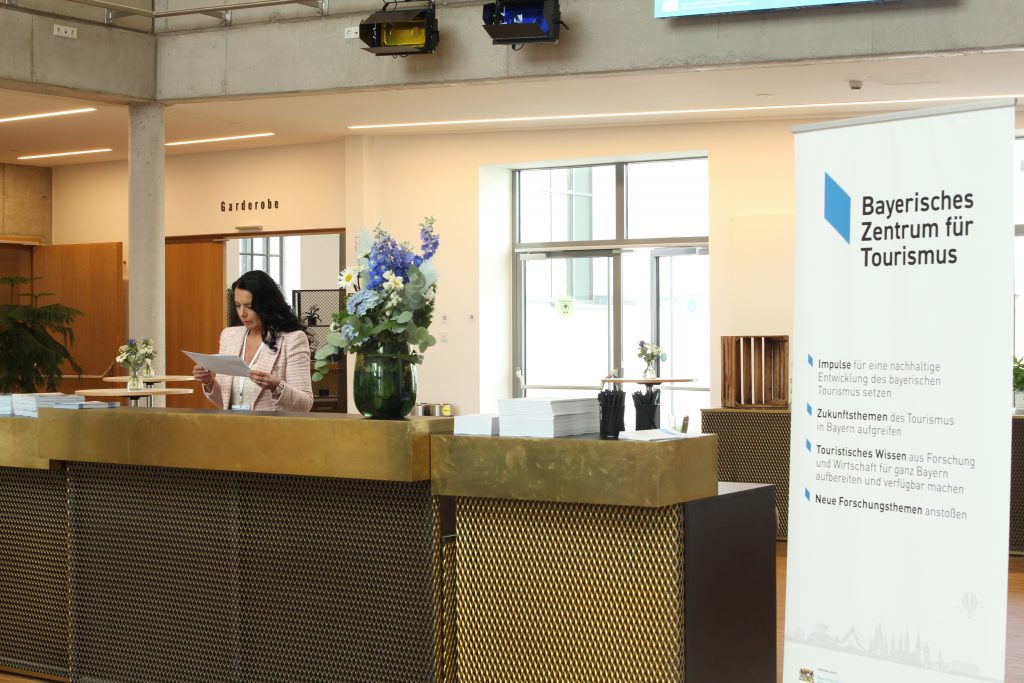
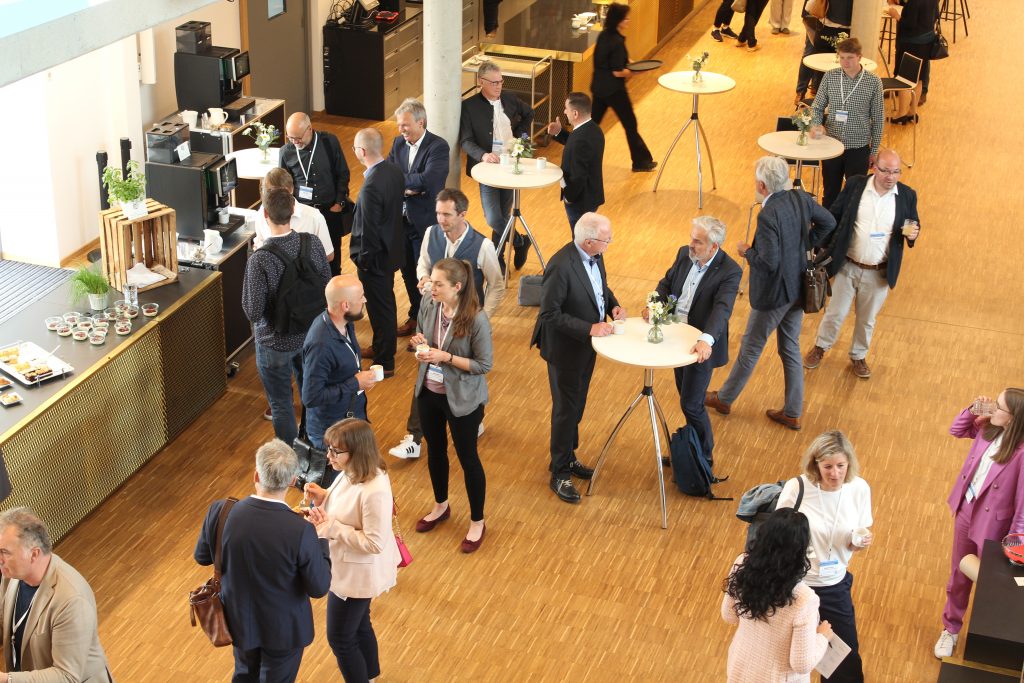
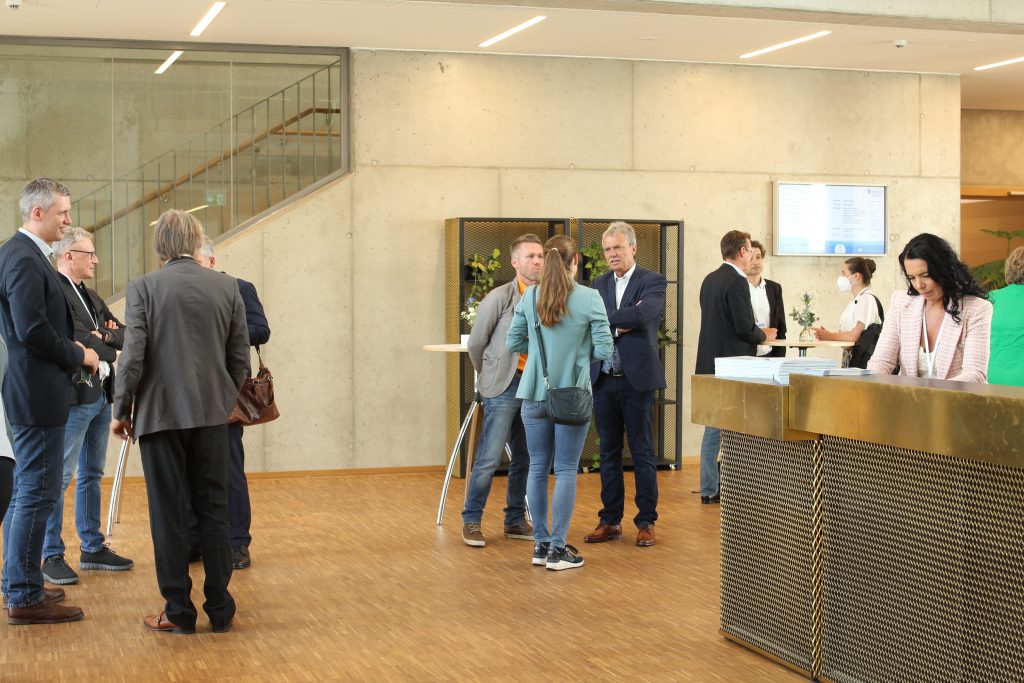
Impressionen