MANAGEMENT SUMMARY
Schlagworte: Nachhaltigkeit, Zielgruppen und Märkte, Reiseverhalten
Nachhaltigkeit bei Urlaubsreisen: Wunsch und Wirklichkeit
Titel: Nachhaltigkeit bei Urlaubsreisen: Wunsch und Wirklichkeit
Autor: Kreilkamp, Edgar
In: Julian Reif und Bernd Eisenstein (Hrsg.) 2019: Tourismus und Gesellschaft – Kontakte – Konflikte – Konzepte.
Verlag: Erich Schmidt Verlag. Berlin.
Jahr: 2019
Seiten: 81-96
Kernaussagen
- Die Nachfrage nach intakter Natur und authentischen Erlebnissen steigt.
- Touristen suchen heute lokale Erfahrungen und Individualität in der Reisegestaltung.
- Wenige Urlauber achten darauf, dass ihre Reise tatsächlich nachhaltig ist.
- Es besteht eine Lücke zwischen Anspruch bzw. Einstellung zu Nachhaltigkeit und dem Handeln: „Attitude-Behaviour-Gap“.
- Zentrale Gesichtspunkte des nachhaltigen Tourismus sind Umweltaspekte und Ressourcenverbrauch.
Autorenprofil
Prof. Dr. Edgar Kreilkamp war bis 2018 Inhaber des Lehrstuhls für Tourismusmanagement an der Leuphana Universität Lüneburg. Im Rahmen einer Gastprofessur an der Leuphana betreut Prof. Kreilkamp weiterhin ein 2019 vom Bundesministerium für Bildung und Forschung genehmigtes Projekt “Green Tourism” zur Entwicklung eines Modells zur Beurteilung der gesamten Urlaubsreise im Hinblick auf Nachhaltigkeit auf Basis eines einheitlichen Datenstandards.
Definitionen
Nachhaltiger Tourismus:
„[…] eine wirtschaftlich tragfähige Entwicklung, die eine gleichbleibende oder sogar wachsende Nachfrage bei geringer oder zumindest gleich hoher Belastung der ökologischen und sozialen Umwelt ermöglicht” (Schmied et al. 2009, S. 23).
Nachhaltige Tourismusentwicklung:
[…] versucht, die Tourismus-Wirkungen in ihrer negativen Form (Risiken) zu reduzieren bzw. in ihrer positiven Form (Chancen) zu verstärken.
Studienergebnisse: Bedeutung der Nachhaltigkeit bei Urlaubsreisen
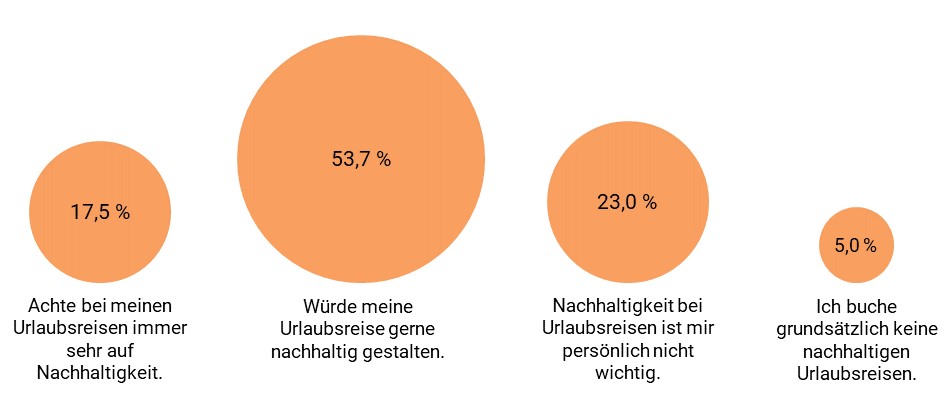
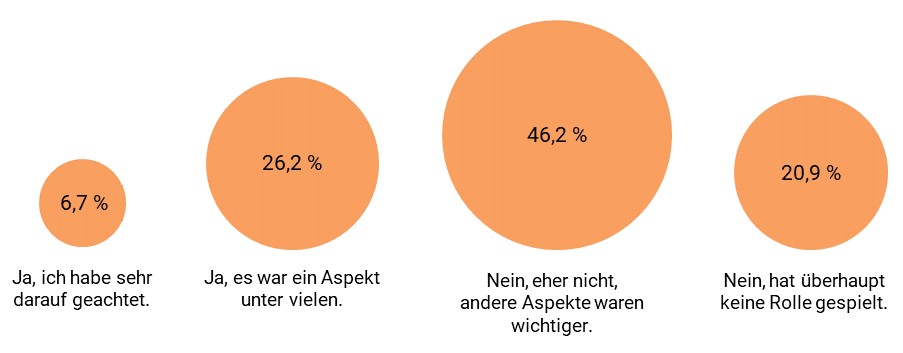
Die Ergebnisse zeigen das Auseinanderfallen von Einstellung und Verhalten („Attitude-Behaviour-Gap“). Denn: 53,7 Prozent der Befragten haben die Absicht ihre Urlaubreise nachhaltig zu gestalten, jedoch haben nur 6,7 Prozent tatsächlich bei der Planung der Reise sehr auf Aspekte der Nachhaltigkeit geachtet.
Quelle: Kreilkamp et al. 2017
Welcher dieser Aussagen zum nachhaltigen Tourismus stimmen Sie generell zu?
Haben bei der Planung Ihrer Urlaubsreise Aspekte der Nachhaltigkeit eine Rolle gespielt?
Problemdarstellung und Lösungsansatz
Im Text werden folgende Buchungshürden in Bezug auf nachhaltige Reisen genannt:
- Angst vor zusätzlichen Kosten
- Befürchtung, Urlaubswünsche würden nicht erfüllt
- Mangelnde einheitliche Kennzeichnung
- Unwissenheit über Labels und deren Glaubwürdigkeit
Der Beitrag nennt vier Aspekte, die für Touristen in Bezug zur Nachhaltigkeit wichtig sind:
- Menschenrechte und lokale Arbeitskräfte
- Flora, Fauna, Landschaft
- regionale Kultur
- wassersparende Maßnahmen
Um die Sichtbarkeit nachhaltiger Angebote zu verbessern werden vom Autor folgende Anregungen gegeben:
- Sensibilisierung/Schulung der Mitarbeitenden in Reisebüros
- Orientierungshilfen geben, da durch die Vielfalt der Label Verwirrung besteht (Die durchschnittliche Bekanntheit der über 800 touristischen Gütesiegel liegt bei 4,7 Prozent)
Lösungsansätze
Der Autor sieht Lösungsansätze im Bereich der Kennzeichnung der Angebote, der Information der Urlauber sowie der Kundenansprache. Er benennt dabei folgende Aspekte:
- Zentrale Datenbank aller zertifizierter Angebote nach den Richtlinien der Global Sustainable Tourism Council (GSTC ). Eine Branchenlösung ist anzustreben.
- Es ist wichtig, auf eine emotionale Ansprache zu setzen und eine Wiedererkennung sicherzustellen.
- Qualitative Vorteile kommunizieren, nicht Verbote, Regeln und Einschränkungen. Für den Gast ist die Glaubwürdigkeit der Siegel entscheidend.
Abstract des Beitrags
“Der Reisemarkt boomt und auch die Nachfrage nach intakter Natur und authentischen Erlebnissen steigt. Aber nur wenige Urlauber achten darauf, dass ihre Reise auch nachhaltig ist. Sie nutzen Landschaft und Natur, denken wenig darüber nach, unter welchen Bedingungen die Menschen in den Urlaubsgebieten leben und erwarten preiswerte Flüge und Reisen ohne Rücksicht auf die Folgen für den Klimawandel.
Um Gründe für den mangelnden Absatz nachhaltiger Reisen identifizieren und Lösungsvorschläge implementieren zu können, bedarf es repräsentativer Consumer Insights potenzieller Reisekäufer. Im Rahmen des Projektes “Green Travel Transformation” wurde eine repräsentative Ad-hoc-Studie mittels Online-Panel mit einer Stichprobe von ca. 2.000 Personen durchgeführt. Sie gibt Auskunft über Wünsche, Erwartungen und Verhaltensweisen in Bezug auf das nachhaltige Reiseverhalten der Deutschen. Während 17,5 Prozent der Bevölkerung angaben, dass sie bei Urlaubsreisen sehr auf Nachhaltigkeit achten und weitere 53,7 Prozent, dass sie gerne ihre Urlaubsreise nachhaltig gestalten würden, haben konkret bei ihrer letzten Urlaubsreise nur 6,7 Prozent sehr auf Nachhaltigkeit geachtet, bei weiteren 26,2 Prozent war es ein Aspekt unter vielen.
Die Lücke zwischen Anspruch beziehungsweise Einstellung und Handeln wird in der wissenschaftlichen Diskussion intensiv unter dem Stichwort “Attitude Behaviour Gap” diskutiert. Ziel muss es sein, auf Basis einer genauen Kenntnis gesellschaftlicher Veränderungen und differenzierter Consumer Insights Strategien für mehr Nachhaltigkeit im Tourismus zu entwickeln.” (Kreilkamp et al. 2019, S. 81)