WISSEN
Schlagworte: Mobilität, Besucherlenkung
Besucherlenkung – Theoretische Einordnung
Von Sybille Mederle, 30.03.2021
Besucherströme zu lenken, gehört nicht erst seit dem letzten Jahr zu den Aufgaben von touristischen Destinationen. Die erhöhte Nachfrage nach Urlaub im eigenen Land durch die Reisebeschränkung in der Corona-Pandemie 2020 hat die Problematik des Overcrowdings verstärkt. Es besteht Handlungsbedarf, sich mit Lösungsstrategien zur Lenkung von Besucherströmen auseinanderzusetzen. Dabei sind die Herausforderungen, insbesondere durch die Digitalisierung, beim Thema Besucherlenkung groß – aber auch die sich daraus ergebenden Möglichkeiten.
„Besucherlenkung umfasst […] Maßnahmen, die geeignet sind, Besucherströme zu entzerren und damit zur Attraktivitätssteigerung der Destination beizutragen. Es geht somit um die Entzerrung im Hinblick auf eine soziale Störungswirkung („crowding“, „overtourism“) ebenso wie die Lenkung von Besucherströmen zur Vermeidung von Übernutzung in ökologischer Hinsicht. Besucherlenkung kann nach dieser Auffassung als Teil des Besuchermanagements aufgefasst werden.“ (Schmücker et al., 2019)
Besucherlenkung behandelt demnach folgende wesentliche Aspekte (Schmücker et al., 2019):
- Räumliche und zeitliche Entzerrung von Besucherströmen
- Zufriedenheit der Touristen und Attraktivität des Aufenthaltsortes
- Schutz vor Übernutzung der Natur und Umgebung
- Auswirkungen auf die Tourismusakzeptanz der einheimischen Bevölkerung
- Nachhaltige und zielgruppengerechte Angebote
- Neue Begegnungen
Um Besucherströme räumlich und zeitlich durch Lenkungssysteme zu entzerren, gibt es verschiedene Handlungsmöglichkeiten. Häufig wird von der Verlagerung des Angebotes in die Nebensaison, einer Definition von Obergrenzen oder Zugangsbeschränkungen gesprochen. (Erschbamer et al., 2018)
Auch der Einsatz von digitalen Plattformen wird innerhalb der Besucherlenkung genutzt, um weniger bekannte Orte oder Attraktionen zu bewerben. Ziel dabei ist es, stark frequentierte Orte zu entlasten. Zusätzlich kann erreicht werden, dass weniger bekannte Orte „touristifiziert“ werden. Eine weitere Möglichkeit zur Besucherlenkung ist es, Besucherströme an bestimmten Orten zu messen und Auslastungen über mobile Endgeräte anzuzeigen oder auf eine Alternative oder weniger bekannte Plätze hinzuweisen. (Schmücker et al., 2019)
Eine Möglichkeit, Besucherströme zu messen, ist es, Daten in Echtzeit zu erfassen, auf die von den zuständigen Ansprechpartnern direkt reagiert werden kann. Das können beispielsweise analoge Meldungen von Mitarbeitern sein, die Daten an Parkplätzen oder Eingängen an neuralgischen Punkten erfassen. Jedoch ist die digitale Datenerfassung insbesondere in der heutigen Zeit effektiv und notwendig, um Maßnahmen langfristig erfolgreich umzusetzen. (Deutscher Tourismusverband e.V., 2021)
Die Ziele der Datenerfassung sind es, neben der Entscheidung für den geeigneten Einsatz von Lenkungsmaßnahmen, zu identifizieren, wie viele Besucher sich auf welche Art und Weise in einem Raum bewegen. Zudem kann so ein Verständnis für die Entstehung und den Zeitpunkt von Besucherhotspots geschaffen und Potenziale für Konfliktsituationen identifiziert werden. Durch Datenerfassung kann zudem die Wirksamkeit eingesetzter Lenkungsmaßnahmen überprüft werden.
Zur Messung des aktionsräumlichen Verhaltens von Touristen finden unterschiedliche Methoden Anwendung (Reif, 2019):
- analoge Methoden
- digitale Tracking-Methoden
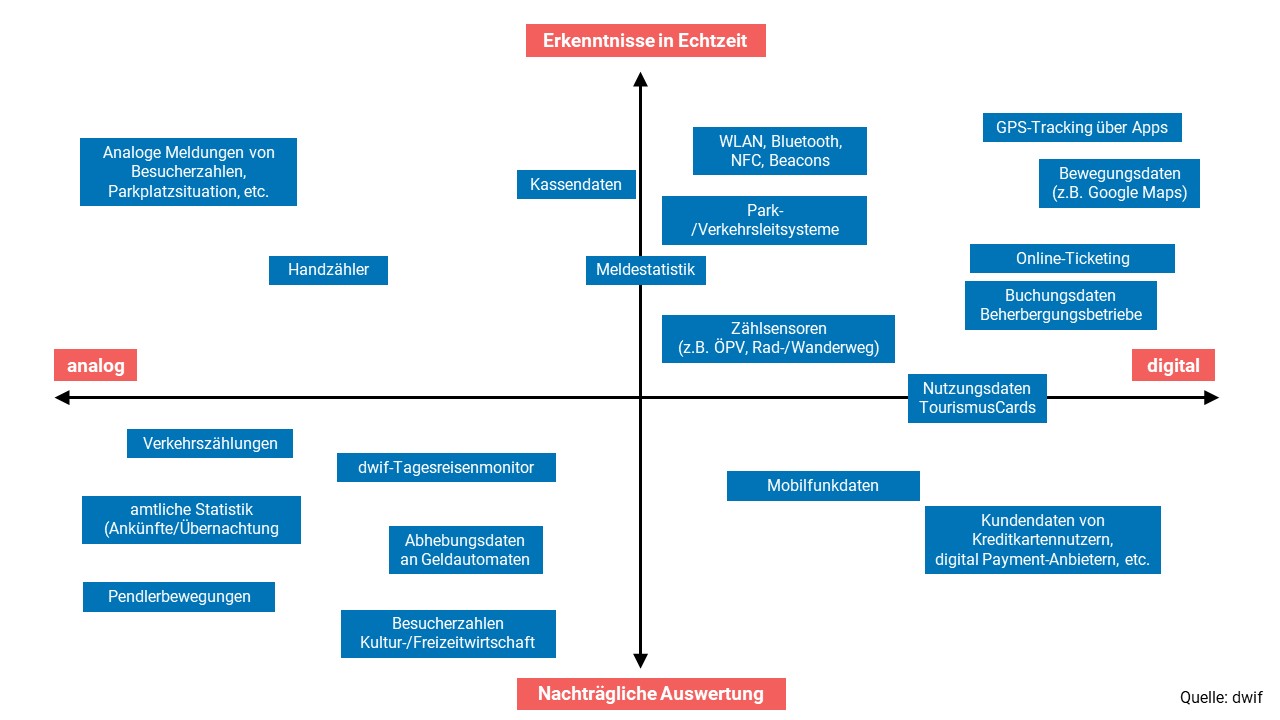
Das dwif ordnet verschiedene Datenquellen und Methoden zur Erfassung des Gästeaufkommens beziehungsweise der Gästebewegungen wie folgt ein.
Datenquellen und Methoden für die Messung des Gästeaufkommens beziehungsweise der Gästebewegungen
Folgend werden verschiedene Lenkungsmaßnahmen, angelehnt an die Definition von Dirk Schmücker, der Lenkungsmaßnahmen in informative, inhibitorische Maßnahmen und Nudging unterteilt, eingeordnet (Schmücker, 2021).
Unter Nudging versteht man „Anreize für die Wahl der nachhaltigeren Alternative zu setzen – durch Belohnungssysteme, Echtzeit-Nutzenversprechen, transparente Information, Bewusstseinsbildung oder Veränderung des Informationsumfeldes“ (Schmücker et al., 2019). Nudging steht nicht für eine Besucherlenkung im „harten“ Sinn, sondern vielmehr für eine erfolgreiche „Besucherbeeinflussung“ (Schmücker et al., 2019). „Also das ,Stupsen‘ zu einem bestimmten Verhalten hin […], um das Handeln der Besucher so zu beeinflussen, dass es zu einem nachhaltigeren Verhalten führt“ (Schmücker et al., 2019).
Weiterhin definiert Schmücker den Einsatz von Lenkungsmaßnahmen als statisch, dynamisch oder prognostisch in einzelnen Hotspots oder in einer gesamten Destination beziehungsweise destinationsübergreifend. Dabei können Maßnahmen analog oder digital noch am Wohnort oder unterwegs ausgespielt werden. (Schmücker, 2021)
Eine erste Einordnung der Maßnahmen kann wie folgt vorgenommen werden:
Informative Lenkungsmaßnahmen
- (Echtzeit-)Informationen zur aktuellen Auslastung (analog oder digital)
- Besucherinfrastruktur/Wegenetz
- Verhaltensregeln
- Hinweistafeln
- Lehrpfade
- Einsatz von Rangern
- Gästekarten
- Sensibilisierungskampagne/n
Inhibitorische (hemmende) Lenkungsmaßnahmen
- Festlegung von Obergrenzen
- Kontingentierung über Ticket-/Reservierungssysteme
- Ge-/Verbote über Beschilderung/Verordnungen
- Zonierung
- Verkehrs-/Parkleitsysteme
- Parkraummanagement (Schranken/Sperrungen/Reduktion von Parkplätzen, Einsatz von Feuerwehr und Polizei)
Nudging- Maßnahmen
- Vermarktung weniger bekannter und weniger frequentierter Orte
- Verlagerung des Angebots in die Nebensaison
- Entwicklung neuer Produkte als Alternativen/Angebotserweiterung
- Zielgruppenorientierte Content-Aufbereitung
- Verzicht auf Marketing
- Einsatz von Gästekarten
- (Echtzeit-) Informationen (analog oder digital) in Verbindung mit intelligenten Empfehlungen (Recommender) für eine Alternative (Schmücker et al., 2019)